 Semiahmoo Exterior
 Building Decks That Actually Hold Up in Point Roberts
Point Roberts sits in a spot most contractors never have to think about: a small peninsula community connected to the rest of Whatcom County only by water or by driving through Canada. That isolation shapes everything about how a deck project should be planned here, from material delivery to scheduling to the kind of crew you want showing up. But the bigger factor is the site itself — waterfront and near-waterfront lots exposed to salt-laden air off the Salish Sea, near-constant winter rain, and long stretches of shade and dampness that feed moss and mildew on anything that isn't built and finished correctly.
A deck built to a generic spec sheet might look fine for the first year or two. Out here, the climate finds every shortcut fast. This page walks through what a custom deck built for Point Roberts conditions actually needs, so you know what to ask for and what to expect from anyone bidding the job.
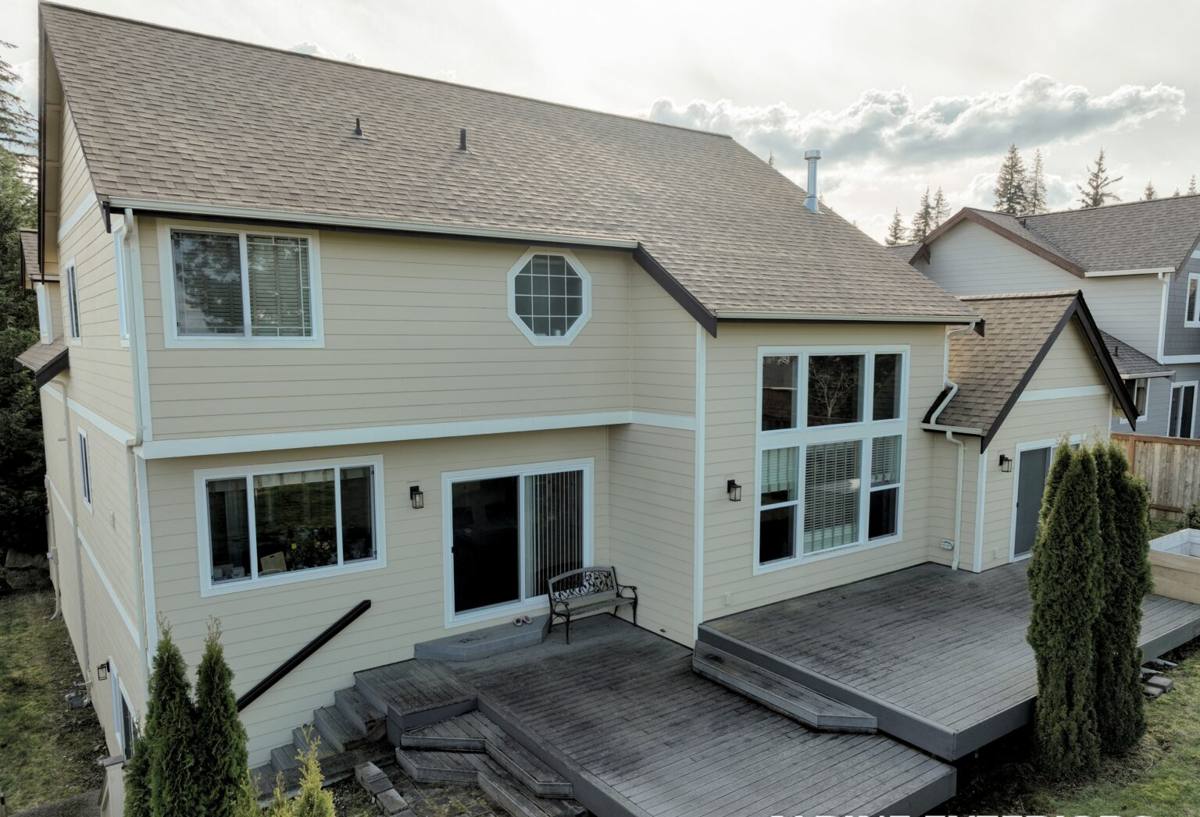
What Salt Air, Rain, and Moss Actually Do to a Deck
Every coastal property in Whatcom County deals with moisture, but proximity to the water changes the details:
- Salt air accelerates corrosion. Fasteners, brackets, and hardware rated for inland use can start rusting years ahead of schedule when they're a few hundred feet from saltwater.
- Driving rain finds gaps. Wind-driven rain off the water doesn't just fall straight down — it gets pushed sideways into ledger connections, stair stringers, and any spot where flashing was skipped or done wrong.
- Shade and dampness grow moss and algae. North-facing decks, decks under tree cover, and decks that don't get afternoon sun stay damp longer, which is exactly what moss and mildew need to take hold on wood surfaces and even on some composites.
- Freeze-thaw cycles are milder here but not absent. A handful of hard freezes each winter is enough to crack poorly cured concrete footings or force out fasteners that weren't seated correctly.
None of this means a deck can't last decades in Point Roberts. It means the build has to account for these conditions from the framing up, not just at the surface finish.
Framing and Structure: Where Most Deck Failures Start
Footings and Frost Depth
Whatcom County's building code sets minimum footing depths to get below the frost line, and that requirement doesn't change because a lot has a view or sits close to the water. Footings poured too shallow, or without proper drainage around them, are one of the most common reasons an older deck starts to feel spongy or uneven within a few years.
Ledger Attachment and Flashing
The ledger board — where the deck attaches to the house — is the single most important structural and moisture detail on the whole project. It needs proper flashing that directs water away from the house rim joist, not just a bead of caulk and a hope. On homes exposed to driving rain off the water, a poorly flashed ledger is where rot starts, often hidden behind the siding where nobody sees it until there's a real problem.
Joist Protection and Fasteners
Uncapped joists absorb standing water at every deck board fastener point, which is exactly where rot begins from the inside out. Joist tape or an equivalent moisture barrier on top of every joist, combined with corrosion-resistant fasteners, is standard practice on a deck meant to last — not an upgrade.
Hardware: Why the Fastener Grade Matters More Here
This is one area where we won't cut corners, and it's worth explaining why. Standard hot-dip galvanized hardware is adequate for most inland builds, but on a waterfront or near-waterfront Point Roberts property, we typically recommend stepping up to stainless steel fasteners and structural connectors — especially for ledger bolts, joist hangers, and anything embedded in or touching pressure-treated lumber, which is chemically corrosive to lower-grade metals. The cost difference is modest relative to the whole project; the difference in how long the connections last is not.
Choosing the Right Decking Material for This Climate
There's no single "best" decking material — there's a best fit for your budget, your maintenance appetite, and how exposed your specific site is to sun, shade, and salt air. Here's how the common options compare for a Point Roberts property:
| Material | Upfront Cost | Moss/Mildew Resistance | Maintenance | Typical Lifespan |
|---|---|---|---|---|
| Pressure-treated wood | Lowest | Moderate — needs regular cleaning/sealing | Annual cleaning + resealing every 2-3 years | 10-15 years with upkeep |
| Cedar | Moderate | Good natural resistance, but still needs sealing | Sealing every 1-2 years in this climate | 15-20 years with upkeep |
| Composite decking | Higher | Good, though algae can still grow on shaded boards | Periodic washing, no sealing/staining | 25-30 years |
| PVC decking | Highest | Best — fully synthetic, doesn't feed mold the way wood fiber can | Occasional washing | 25-30+ years |
On shaded or north-facing lots, or decks tucked under tree cover, we lean harder toward composite or PVC precisely because moss and algae have an easier time taking hold on wood in those spots regardless of species. On open, sun-exposed decks, a well-maintained cedar or pressure-treated deck can perform very well and costs less to start.
A Note on Wood-Alternative Products
We install both wood and composite/PVC systems, and we'll tell you honestly which fits your situation rather than pushing whatever has the best margin. Composite and PVC cost more up front and some homeowners don't love the feel or look compared to real wood — that's a legitimate trade-off, not a flaw we're hiding. What we won't do is install any decking product without proper substructure ventilation and moisture management underneath it, because even moisture-resistant boards can trap dampness against joists if the framing details are ignored.
Railings, Stairs, and Code Requirements
Any deck more than a modest height off grade needs code-compliant railing — proper baluster spacing, top rail height, and load ratings that meet Whatcom County's adopted building code. On waterfront lots with elevated decks or steep grade changes, this isn't optional detail work; it's a safety requirement and an inspection item. We build railings to pass inspection the first time, using hardware rated for the same coastal exposure as the rest of the structure.
Permits and the Point Roberts Factor
Point Roberts falls under Whatcom County jurisdiction for permitting, even though the community itself is physically separated from the rest of the county by the Canadian border. That means the same permitting and inspection process applies as anywhere else in the county — but the logistics of getting a permit application filed, an inspector out, and materials delivered are genuinely different when the only way in by land means crossing an international border twice.
A crew that already works in Point Roberts has that logistics figured out: what to bring across in one trip instead of several, how to schedule inspections efficiently, and how to keep a project moving without repeat border crossings burning half the workday. That's not a small thing on a multi-week deck build.
Our Process for a Point Roberts Deck Project
- On-site assessment. We look at sun exposure, drainage, existing structure (if replacing a deck), and how close the site is to the water, since that changes our hardware and material recommendations.
- Design and material selection. We walk through decking material options, railing style, and layout based on your budget and how much maintenance you actually want to do long-term.
- Permitting. We handle the Whatcom County permit application and coordinate inspection timing around the realities of getting to and from Point Roberts.
- Materials and logistics. We plan deliveries and crew trips to minimize border crossings and keep the project on schedule.
- Construction. Proper footings, flashed ledger connection, joist protection, corrosion-resistant fasteners, and code-compliant railing — built in that order, not shortcut.
- Final walkthrough. We go over basic care for whatever material you chose so the deck holds up the way it's supposed to.
Keeping a Point Roberts Deck in Good Shape Year After Year
Even a well-built deck needs some seasonal attention in this climate. A simple maintenance routine goes a long way toward avoiding early repairs:
- Sweep debris and standing leaves off the deck surface regularly, especially in fall — trapped organic matter is what feeds moss and mildew fastest.
- Rinse salt residue off hardware and railings periodically if the deck is close to the water.
- Check that gaps between deck boards stay clear so water drains through instead of pooling.
- Inspect fasteners and railing connections once a year for early signs of rust or looseness.
- Reseal or restain wood decking on the schedule appropriate to the species — don't wait until it's visibly gray and dry.
- Keep gutters and downspouts near the deck clear so roof runoff isn't dumping extra water onto or under the structure.
Why Local Experience with Point Roberts Matters
A deck contractor who's never worked past the border crossing will underestimate scheduling, may not have already worked out material delivery logistics, and may not default to the corrosion-resistant hardware this coastal environment calls for. We build decks throughout Semiahmoo and Whatcom County, and Point Roberts' particular mix of salt air, driving rain, and border logistics is something we plan for from the first estimate, not something we figure out mid-project.
If you're considering a new deck or need to replace one that's showing its age, we're happy to come take a look and put together a straightforward, no-pressure estimate. Use the form below to get started.