 Semiahmoo Exterior
 Roof Repair Built for Marietta's Climate
Homes in the Marietta area of Semiahmoo sit close enough to the water that salt air is part of daily life, and close enough to the Cascades' weather patterns that driving rain and long, damp winters are the norm rather than the exception. That combination is hard on a roof in ways that inland homes never deal with. Fasteners corrode faster. Moss gets a longer growing season to work its way under shingles and shakes. Wind-driven rain finds its way into laps and flashings that would stay dry in a drier climate. If you own a home in Marietta, your roof is working harder than the average roof, and it needs repair work that accounts for that.
This page is specifically about roof repair for Marietta homes — not a full re-roof, and not a generic roofing overview. It's about what goes wrong here, what a correct repair actually involves, and why local experience matters when you're trying to stop a leak or extend the life of a roof that still has good years left in it.
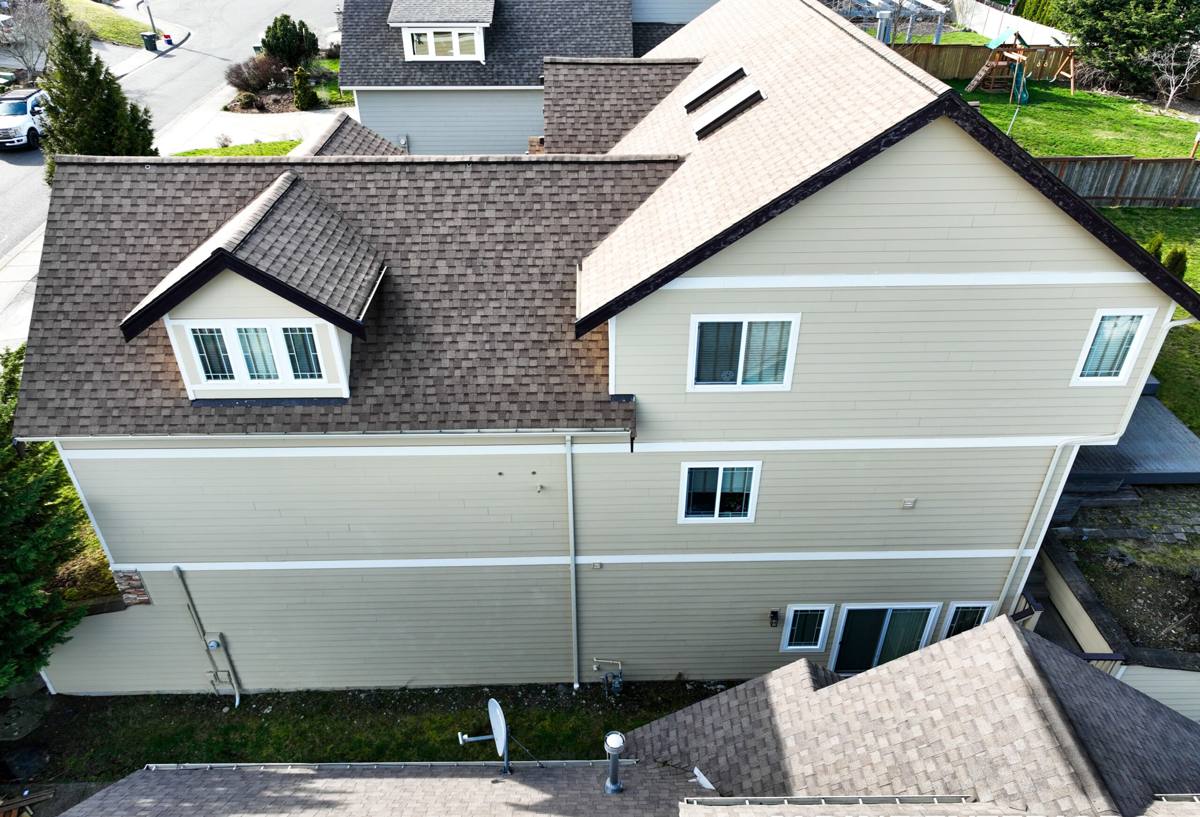
Why Marietta Roofs Wear Differently
Salt Air and Corrosion
Proximity to Semiahmoo Bay means airborne salt settles on roofing materials, flashing, fasteners, and vents. Over time, salt exposure accelerates corrosion on exposed metal — nail heads, drip edge, flashing seams, and any galvanized or lower-grade metal components. A fastener that would last decades inland can start rusting and backing out years sooner in a salt-air environment. When we're diagnosing a leak on a Marietta roof, checking fastener and flashing condition is one of the first things we do, because corrosion-related failures are common here and easy to miss from the ground.
Moss and Organic Growth
Whatcom County's mild, wet winters and shaded lots (common throughout Marietta's tree-lined streets) create ideal conditions for moss, algae, and lichen to establish on roofing surfaces. Moss isn't just cosmetic. As it grows, it holds moisture against the roofing material, lifts shingle edges, and can work its way under laps where it keeps that section of roof damp for months at a time. On shake and shingle roofs especially, unmanaged moss growth is one of the leading causes of premature rot and granule loss we see on repair calls in this area.
Driving Rain and Wind Exposure
Open exposure near the water means Marietta homes take wind-driven rain that can push water sideways into laps, valleys, and flashing details that would otherwise shed water fine in a straight-down rain. Roofs that were installed correctly for a calmer climate sometimes show their weaknesses here — a valley that's marginal, a step flashing that's a little short, a vent boot that's just barely adequate. Repair work in this area has to account for wind-driven rain, not just gravity.
What a Correct Roof Repair Involves
A proper repair starts with finding the actual source of the problem, not just patching where water is showing up inside the house. Water often travels along the underside of the roof deck or down a rafter before it appears as a stain on the ceiling, so the visible damage and the actual leak point can be several feet apart. Our process for a Marietta repair call typically includes:
- A full roof inspection, not just a spot check at the reported leak location
- Checking flashing at all penetrations — chimneys, vents, skylights, and wall intersections
- Assessing moss and organic growth coverage and whether it has caused underlying damage
- Inspecting fasteners and exposed metal for salt-air corrosion
- Checking valleys and eaves for proper water flow and any signs of ice or debris damming
- Confirming attic ventilation isn't contributing to moisture problems from the inside
Once we know what's actually causing the issue, we scope a repair that addresses the cause — not just the symptom. Replacing a stained ceiling patch without fixing the flashing above it just means the same repair call again in a year or two.
Common Roof Repair Issues We See in Marietta
| Issue | What's Usually Going On | Typical Fix |
|---|---|---|
| Leak around chimney or vent | Flashing has corroded, pulled loose, or was undersized for wind-driven rain | Remove and replace flashing with correctly sized, properly lapped metal |
| Moss-damaged shingles or shakes | Sustained moisture from moss growth has caused rot or granule loss | Moss removal, treatment, and replacement of affected roofing sections |
| Rusting fasteners or exposed nail heads | Salt-air corrosion has degraded fasteners or caused them to back out | Fastener replacement with corrosion-resistant hardware, resealing as needed |
| Valley leaks | Debris buildup or an undersized valley allowing water to overflow in heavy rain | Clear debris, inspect valley metal, repair or reline as needed |
| Soft or sagging roof deck | Long-term moisture intrusion has begun rotting the sheathing underneath | Localized deck replacement in addition to surface repair |
Costs for these repairs vary widely depending on scope, accessibility, and how much of the underlying deck (if any) needs replacement. A straightforward flashing repair might run a few hundred dollars, while a repair that includes deck replacement due to hidden rot can run into the thousands. We won't quote a number without seeing the roof — anyone who does is guessing.
Signs a Marietta Homeowner Shouldn't Ignore
Roof problems in this climate rarely announce themselves clearly at first. By the time you see a stain on a ceiling, water has often been getting in for a while. Watch for:
- Dark streaks or green/black growth on roofing surfaces, especially on north-facing or shaded slopes
- Granules collecting in gutters (a sign of shingle wear or moss-related breakdown)
- Rust streaks running down from flashing or vent pipes
- Any interior ceiling stain, even a small one, especially after a windy rainstorm
- Visible daylight or gaps around chimney or vent flashing from the attic
- Shingles that look lifted, curled, or out of place after a wind event
Catching these early is almost always cheaper than waiting. A flashing repair today is a lot less expensive than deck and insulation replacement after months of hidden moisture damage.
Our Repair Process
1. Inspection and Diagnosis
We start with a thorough on-roof and attic inspection to find the actual source of the problem, not just the visible symptom.
2. Honest Scope and Explanation
We walk you through what we found, what's causing it, and what it will take to fix it correctly — including options if there's more than one reasonable approach.
3. Repair Work
We complete the repair using materials and methods suited to this climate — corrosion-resistant fasteners, properly lapped flashing, and attention to how wind-driven rain moves across the roof.
4. Follow-Up Check
For repairs tied to an active leak, we follow up after the next significant rain to confirm the fix held.
Why Hire a Crew That Already Works in Marietta
Roof repair isn't one-size-fits-all, and a crew that mostly works drier, inland climates may not think to check for salt-air corrosion on flashing fasteners, or may underestimate how much moss growth has already gotten under a shake roof's laps. Working regularly in Semiahmoo and the surrounding Whatcom County area means we see the same failure patterns repeatedly — corroded valley metal, moss-lifted shingle edges, wind-pushed water at marginal flashing details — and we know to check for them even when they're not the reported problem.
We also know that a repair on a Marietta home needs to hold up through another wet Pacific Northwest winter, not just look fixed on a dry day when we do the work. That's the standard we hold repairs to.
When Repair Makes Sense vs. When It Doesn't
Not every roof problem needs a full replacement, and not every roof problem should be patched forever. As a general guide:
- Repair usually makes sense when damage is localized (one flashing detail, one valley, isolated moss damage) and the rest of the roofing material is still in reasonably good condition
- Replacement should be considered when repairs are becoming frequent, when deck rot is showing up in multiple areas, or when the roofing material itself is past its expected service life
We'll give you a straight answer on which category your roof falls into. Our goal is a roof that performs, not a repair sold for its own sake.
If you're dealing with a leak, visible moss damage, or just want a professional assessment of how your Marietta roof is holding up against the salt air and rain, we're happy to take a look. Request a free, no-pressure estimate using the form below.