 Semiahmoo Exterior
 Why Decks Wear Out Faster in Lynden
Lynden sits inland from the immediate Whatcom County coastline, but it still sits squarely inside the same wet weather pattern that defines exterior work across this part of Washington. Driving rain moves through in long stretches from fall through spring, and a moss season that can run most of the year settles onto any horizontal surface that doesn't dry out fast. A deck is the most exposed horizontal surface on most homes, and it takes that load directly, season after season, in a way that vertical siding and steep roof planes don't.
Salt-influenced marine air is more of a factor for homes closer to the water than it is for most Lynden properties, but it still shows up here on breezy days, and it matters for one thing in particular: fastener and hardware corrosion. A deck built with the wrong fasteners will show rust streaking and loosening connections years before the decking itself gives out. Combine that with Lynden's mix of open farmland and tree-sheltered lots, where shade and airflow vary a lot from one yard to the next, and you get a wide range in how fast two decks of the same age and material can deteriorate depending on where they sit on the property.
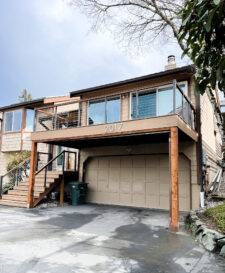
Repair or Replace: How to Tell
Not every tired-looking deck needs a full replacement, but a lot of decks that could be saved with an earlier repair end up needing full replacement because the underlying framing was never checked. The visible decking boards are almost never the real question. The structure underneath is.
- Soft, spongy, or bouncy spots when you walk across the deck, especially near the house or around posts
- Rust staining running down from fasteners or ledger board connections
- Persistent moss or dark staining on the decking that returns within weeks of cleaning
- Gaps opening up between the ledger board and the house siding or rim joist
- Wobbly, loose, or visibly leaning railings and posts
- Visible rot or splitting where posts meet footings or where joists meet the ledger
- A deck built more than 15-20 years ago with no record of the framing ever being inspected
If it's just surface graying or a few worn boards on an otherwise sound structure, a repair or partial board replacement can be the right call. Once the framing, ledger connection, or footings are compromised, patching the decking on top of a failing structure just hides the problem for another season or two.
What a Correct Deck Replacement Actually Involves
The Structure Comes First
Everything visible on a deck, decking boards, railings, stairs, sits on a structural frame that almost nobody looks at once it's built. That frame is the part that actually determines how long the deck lasts in this climate. A correct replacement starts with the ledger board attachment to the house, since that connection carries a large share of the deck's total load and is also the single most common point of water intrusion if it isn't flashed correctly.
From there, footing depth and post connections need to hold up to Whatcom County's frost and moisture conditions, and every joist hanger, bolt, and fastener needs to be rated for exterior or ground-contact use, not just standard interior hardware pulled from a cheaper price list.
Flashing Is Where Most Deck Failures Start
The ledger flashing, the metal or membrane detail that keeps water from tracking behind the ledger board and into the house rim joist, is easy to skip or install poorly, and it's also invisible once the deck is finished. It's also the single most common source of hidden rot we find when we tear out an old deck. Wind-driven rain doesn't just fall on a deck from above; it drives sideways and gets forced up against that ledger connection, which is exactly why flashing detail matters more here than it would in a drier climate.
Decking Material and Fastening
Board spacing, fastener choice, and the decking material itself all affect how fast moss and standing moisture become a problem. Boards spaced too tight trap debris and moisture between them; the wrong fastener corrodes and stains the decking around it; and a decking product with poor moisture behavior will cup, splinter, or hold algae growth well before it should.
Decking Material Options for a Lynden Home
| Material | Upfront Cost | Maintenance | Moisture & Moss Behavior |
|---|---|---|---|
| Pressure-treated wood | Lowest | Regular cleaning, sealing, and staining needed | Absorbs moisture readily; needs consistent upkeep to resist moss and rot |
| Cedar | Moderate | Periodic sealing to maintain color and moisture resistance | Naturally rot-resistant but still needs maintenance in sustained wet conditions |
| Capped composite | Higher | Occasional washing, no staining or sealing | Strong moisture and stain resistance; some early composite products without a cap layer performed worse |
| PVC decking | Highest | Minimal; occasional washing | Doesn't absorb moisture at all, which helps most against sustained rain and moss, though it can look and feel less like traditional wood |
There's no single right answer here — it depends on budget, how much upkeep a homeowner actually wants to do, and how the deck is oriented and shaded on the property. We'll walk through the real trade-offs for your specific deck rather than defaulting to whatever's easiest to sell.
Our Deck Replacement Process
- On-site assessment: We inspect the existing structure, footings, ledger connection, and surrounding grading before quoting anything, since a lot of what determines cost and scope isn't visible from the deck surface.
- Scope and material selection: We walk through decking, railing, and structural options with you, including honest trade-offs on maintenance and cost, before finalizing a plan.
- Permitting: Most deck replacements in Whatcom County require a permit, particularly when footings, framing, or railing height and structure are involved. We handle that process rather than leaving it to the homeowner.
- Demolition: The old deck comes out, and we check the ledger area and any framing that was hidden underneath for rot or water damage before building back.
- Framing and flashing: New footings, posts, joists, and ledger flashing go in to current code, built for this climate rather than the minimum spec.
- Decking, railing, and stairs: Final surfaces go on with fastening and spacing chosen for drainage and long-term moss resistance.
- Final walkthrough and inspection: We review the finished deck with you and make sure any required inspection sign-off is completed.
Permits and Code in Whatcom County
Deck replacement in Lynden typically falls under Whatcom County's building permit requirements once you're dealing with structural framing, footings, or railings above a certain height, even if the footprint matches the old deck exactly. Guardrail height, baluster spacing, and stair geometry all have specific code requirements, and older decks built before current code was in place often don't meet today's standard. Replacing a deck is usually the right time to bring those details up to current code rather than rebuilding the same non-compliant railing or stair configuration. We handle the permit application and inspection scheduling as part of the job rather than treating it as the homeowner's problem to sort out separately.
Maintaining a New Deck Through Whatcom County's Wet Season
Even a well-built deck needs some seasonal attention in this climate. A few habits go a long way toward getting the full expected lifespan out of a new deck:
- Sweep leaves and debris off the deck regularly in fall, especially between boards, so moisture doesn't sit trapped against the surface
- Rinse off moss and algae buildup before it gets a foothold, rather than waiting until it's visibly established
- Keep gutters and downspouts near the deck clear so runoff isn't dumping extra water onto or under the deck surface
- Check railing and post connections once a year for looseness, particularly after a hard winter
- For wood decking, plan on resealing on the manufacturer's recommended cycle rather than waiting until it visibly grays
Why a Crew That Already Works in Lynden Matters
A deck built by a crew that only occasionally works in this climate tends to look fine on day one and start showing problems within a few wet seasons, usually at the ledger flashing, the fastener choice, or a footing depth that didn't account for local conditions. A crew that works Lynden and the surrounding Whatcom County area regularly has seen how these specific failure points actually play out on real decks over time, not just on a spec sheet. That shapes practical decisions on install day: where the flashing detail gets extra attention, which decking spacing actually drains well in this rainfall pattern, and which shortcuts aren't worth taking even though they'd save an afternoon. Those are small decisions individually, but they're the difference between a deck that's still solid in fifteen years and one that needs another rebuilt in eight.
Questions Worth Asking Before You Hire
- Will you pull a permit for this project, and who's responsible for scheduling inspections?
- What fastener and hardware ratings do you use for ground contact and exterior exposure?
- How will the ledger board be flashed, and what happens if you find rot behind it during demo?
- What footing depth and post spacing are you planning for this specific deck, and why?
- Can you walk me through the maintenance difference between the decking materials you're quoting?
If you're weighing a deck replacement for your Lynden home, we're glad to take a look and give you a straightforward assessment of what your current deck needs and what a correct replacement would involve. Reach out using the form below for a free, no-pressure estimate.