 Semiahmoo Exterior
 New-Construction Windows in Laurel: Getting the Building Envelope Right the First Time
Laurel sits in the Semiahmoo area of Whatcom County, close enough to the water to feel the same marine climate that shapes exterior work across this whole corner of the county — salt-laden air, driving rain that doesn't always fall straight down, and a moss season that runs most of the year on shaded roof and wall surfaces. For a home going up from the ground rather than being renovated, that climate isn't a problem to fix later. It's a design input from day one, and nowhere does that matter more than at the windows.
New-construction window work is a different job than replacing windows in an existing wall. There's no old siding to work around, no compromised flashing to patch, and no guessing at what's hidden behind the finish surfaces. That's an advantage, but only if the installer treats it as one — because a new build done with sloppy flashing habits will lock moisture problems into the wall assembly just as surely as a bad retrofit would, and they'll be a lot harder to find until they've already caused damage.
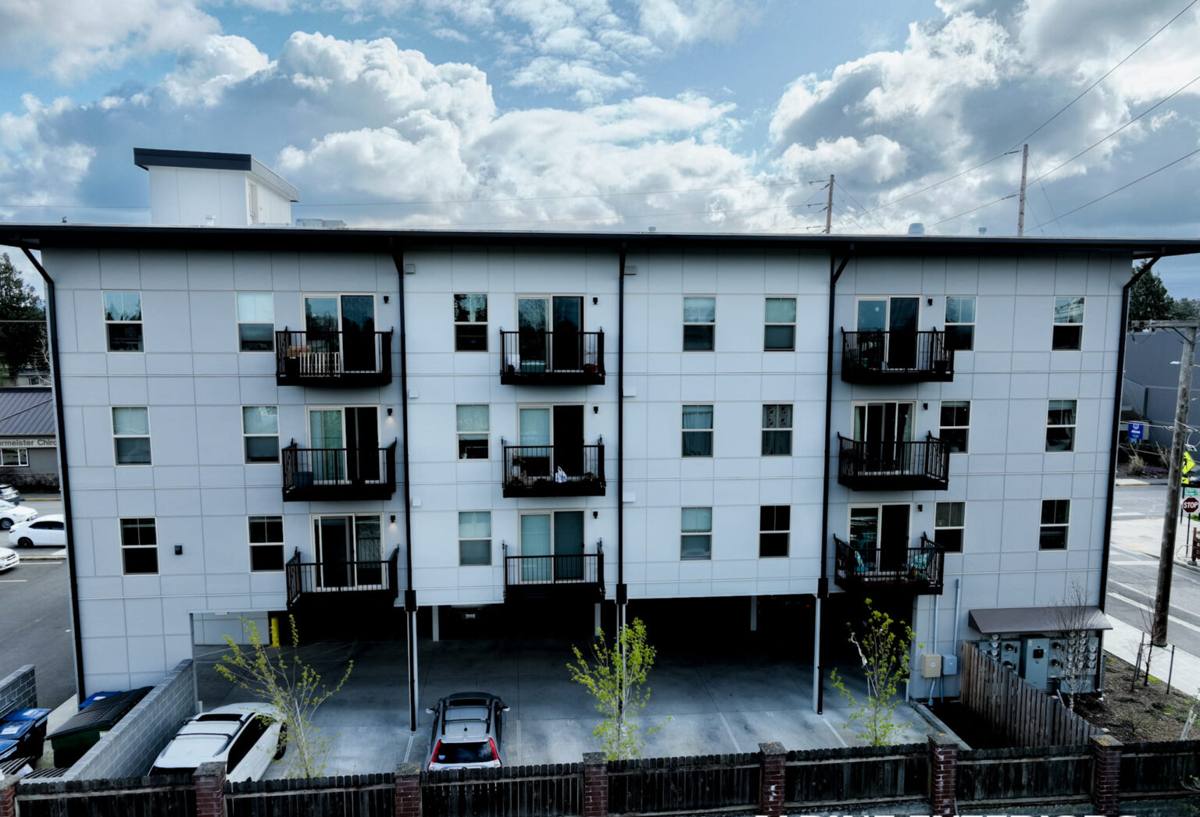
What New-Construction Window Installation Actually Means
Nail-Fin Windows vs. Retrofit or Replacement Windows
New-construction windows are typically nail-fin units — the window frame has a flange around its perimeter that gets fastened directly to the wall sheathing and integrated into the weather-resistive barrier before siding goes on. That's different from retrofit or block-frame windows used in replacement work, which are designed to fit into an existing rough opening without disturbing the siding around it. Nail-fin installation gives a crew full access to build the flashing assembly correctly from the sheathing outward, which is exactly what a demanding climate like this one calls for.
Why Timing With the Framing Schedule Matters
Windows have to go in at a specific point in the build sequence — after the rough openings are framed and the wall is sheathed and wrapped, but before siding or trim closes everything up. Get that sequencing wrong and you either delay the whole exterior schedule or end up with a crew rushing window installation to keep the project moving. Neither outcome is good for flashing quality. We coordinate directly with the builder or general contractor on timing so the window installation happens at the right point in the sequence, not squeezed in around it.
What Laurel's Climate Demands From a New Build's Windows
Salt Air and Corrosion
Properties in the Semiahmoo area deal with salt-laden air more consistently than homes further inland in Whatcom County. Salt accelerates corrosion in fasteners, hinges, cranks, and lower-grade hardware, and it breaks down cheap finishes faster than a drier climate would. On a new build, that means the hardware and fastener specification for the windows needs to account for corrosion resistance from the start — it's much easier to get right during construction than to retrofit later.
Wind-Driven Rain
Open exposure near the water means storms push rain sideways into wall assemblies instead of straight down. Wind-driven rain finds seams and laps that a calmer, more sheltered inland site would never test. On a new build, the flashing has to be detailed to handle that pressure from the first storm the house sees, because there's no track record yet to tell you where the weak points are — the design has to anticipate them.
A Long Moss and Mildew Season
Mild temperatures and near-constant moisture through fall, winter, and spring give moss and mildew a long growth season across this part of the county. On new construction, window sills, trim, and any horizontal or shaded surface near an opening are worth designing with drainage in mind from the start — a sill that's pitched correctly and flashed with a functioning weep path sheds water and resists growth far better than one that was framed level and caulked to compensate.
Condensation and Temperature Swings
Damp winters and the gap between warm interiors and cold, wet exteriors put real condensation pressure on glass and frames. A new build gives you the chance to choose a glazing package suited to that pressure from the outset, rather than discovering years later that the original windows fog or sweat constantly through the winter.
The Flashing Sequence That Determines Long-Term Performance
On new construction, flashing is installed in a specific shingle-lap order so that water is always directed down and out, never trapped behind a layer that's supposed to be stopping it. Sill flashing goes in first, pitched and panned so any water that reaches it drains back out over the wall's weather-resistive barrier rather than into the framing. Jamb flashing laps over the sill flashing on both sides. Head flashing goes in last, lapping over the top of the nail fin and tucking under the weather-resistive barrier above the opening, so water running down the wall sheds over the window rather than behind it. Every layer overlaps the one below it — that order is what keeps the whole assembly working as a system instead of a collection of parts.
Rough Opening Tolerances
Getting this right starts before the window ever arrives on site. Rough openings need to be framed to the correct dimensions with consistent, appropriate clearance around the window unit — too tight and the window can't be shimmed and squared properly; too loose and there's more gap for the flashing and insulation to manage than necessary. We check rough opening sizing against the actual window order before installation day, not after, so there are no surprises when the units show up.
Choosing the Right Window Package for a New Build in This Climate
New construction gives you a clean slate on window selection — no existing frame color or profile to match, no compromise forced by what's already in the wall. That's worth using well. For a Laurel property, the priorities are a frame material that resists corrosion and moisture damage, a glazing package that manages both energy performance and condensation, and hardware rated for sustained marine air exposure. Washington's energy code also sets minimum performance requirements for new construction fenestration, so the window package needs to meet current code minimums for this climate zone — that's something to confirm with your window supplier and installer early, not after the walls are closed in.
| Feature | Vinyl Frames | Fiberglass Frames |
|---|---|---|
| Cost | Generally lower upfront | Generally higher upfront |
| Dimensional stability | Can expand and contract more with temperature swings | More stable across temperature changes |
| Rot resistance | Resists rot; not moisture-absorbent | Resists rot; not moisture-absorbent |
| Color and finish options | Limited, typically fixed at manufacture | Can hold paint for custom color if desired |
| Best fit | Budget-conscious builds prioritizing value | Builds prioritizing long-term dimensional stability |
Coordinating With Your Builder or General Contractor
New-construction window work rarely happens in isolation — it's one piece of a larger build sequence involving a framer, a siding crew, and often a general contractor keeping the whole schedule on track. Clear coordination matters because window installation has to hit its window (so to speak) after sheathing and wrap are complete but before siding closes things up, and because responsibility for weather-resistive barrier integration needs to be clearly assigned so nothing falls through the cracks between trades. We work directly with builders and GCs on scheduling and scope so the window installation fits cleanly into the rest of the build rather than becoming a bottleneck or a gap in accountability.
A Practical Checklist for New Construction in Laurel
- Confirm the window installer's flashing sequence in writing before installation day, not just their window brand or model
- Verify rough opening dimensions against actual window order confirmations before the units arrive on site
- Ask how the window flashing will integrate with the weather-resistive barrier and the siding crew's plans
- Confirm the glazing package meets current Washington energy code requirements for this climate zone
- Confirm current Washington contractor licensing and active liability insurance
- Get a written scope that separates the manufacturer's product warranty from the installer's workmanship warranty
- Ask about lead times on window orders, since custom sizes can take several weeks to arrive
Why a Local Crew Matters for New Construction in the Semiahmoo Area
A crew that regularly builds in the Semiahmoo area already knows how salt air, open wind exposure, and a long wet season behave here compared to a drier, more sheltered inland site. That familiarity shows up in the details that don't get inspected as closely as the visible finish work — how much lap a flashing layer gets, whether a sill is pitched enough to actually drain, which hardware grade gets specified for a coastal Whatcom County build. Those are the decisions that determine whether a new build's windows perform for one wet winter or for decades.
Our Process
We start by reviewing the build's plans and window schedule with the builder or homeowner, confirming rough opening sizing, glazing specifications, and how window flashing will tie into the weather-resistive barrier and siding sequence. We coordinate installation timing to land at the right point in the framing schedule, and we install every window using a consistent, shingle-lapped flashing sequence as standard practice — not as an upgrade. Before siding closes the wall, we confirm the flashing and drainage detailing are correct, because that's the point where mistakes are still cheap to fix.
If you're planning a new build in Laurel or the wider Semiahmoo area and want windows installed right from the start, we're happy to walk through your plans and give an honest read on what your project needs. Reach out below for a free, no-pressure estimate.