 Semiahmoo Exterior
 Decking Built for the Drayton Harbor Waterfront
Homes around Drayton Harbor sit close enough to the water that the deck outside your back door is doing a different job than a deck in an inland Whatcom County neighborhood. Salt-laden air off the harbor, wind-driven rain that gets under railings and around posts, and a moss season that can stretch from fall through spring all put steady stress on outdoor structures here. A deck built to a generic spec, or installed by a crew that hasn't worked this shoreline before, tends to show problems early — soft spots, corroded hardware, slick green boards by January. Composite decking, installed correctly for this specific environment, is one of the more reliable answers to that problem, and this page walks through why, and what "installed correctly" actually means out here.
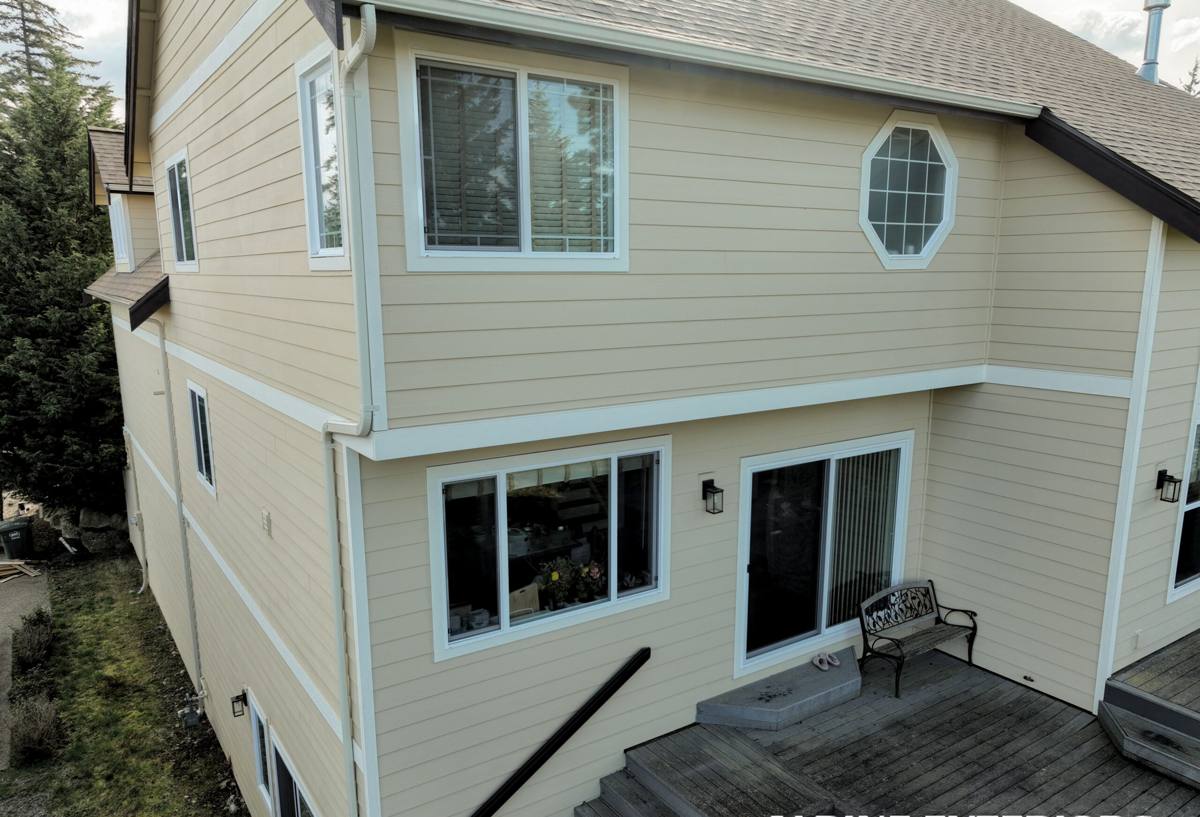
What Salt Air and a Long Moss Season Actually Do to a Deck
It helps to understand the mechanism before talking about the fix. Two things drive most of the deck damage we see on Drayton Harbor properties:
Salt Air and Corrosion
Airborne salt from Semiahmoo Bay settles on every exposed surface, including fasteners, flashing, and railing hardware. Ordinary galvanized screws and brackets can start corroding faster near the water than they would a few miles inland. Once a fastener starts to rust, it swells slightly, which cracks the wood or composite around it and lets moisture in — a small hardware problem becomes a structural one.
Moss, Algae, and Trapped Moisture
Whatcom County's wet, mild winters give moss and algae a long window to establish themselves on any shaded or poorly-ventilated deck surface. Moss holds moisture against the board surface far longer than open air ever would, which is exactly the condition that breaks down uncapped wood-plastic composites and rots wood decking from the top down. A deck with good airflow underneath and a surface that doesn't hold water sheds this problem; one without those things fights it every year.
Why Composite Decking Suits This Environment
Composite decking isn't automatically the right call for every project, but for a harbor-adjacent property it solves several of the problems above at once, provided the board itself is a good match for wet climates.
Capped vs. Uncapped Composite
Most composite boards sold today are either fully capped (a solid polymer shell wrapped around a wood-plastic core) or partially capped on the top and sides only. Fully capped boards resist moisture absorption and staining better, which matters more here than in a dry inland climate, because the board spends more days per year actually wet. Older-style uncapped wood-plastic composite can still absorb moisture at cut ends and fastener holes, and in a salt-air, high-rainfall setting that shortens its useful life compared to a capped board.
Color and Surface Considerations
Lighter and mid-tone composite colors show less algae staining than very dark boards, and boards with a deeper embossed grain pattern tend to hide the fine surface grime that salt air and moss leave behind between cleanings. None of this replaces proper maintenance, but it's a real factor worth discussing when you're picking a color and finish for a deck this close to the water.
What a Correct Composite Deck Installation Involves Here
The board itself is only part of the story. Most of the deck failures we get called out to inspect near the water trace back to installation shortcuts, not the decking material.
Framing and Substructure
Joists and beams should be either naturally durable, factory-treated for ground or weather contact as appropriate, or protected with a joist tape barrier at every cut and fastener point. In a high-moisture environment, skipping joist protection is one of the fastest ways to get hidden rot under a deck that looks fine on top.
Fasteners, Brackets, and Flashing
Given the corrosion risk from salt air, hardware matters more here than in most parts of the state. That means stainless steel or coated, corrosion-rated fasteners and structural hardware, correctly flashed ledger boards where the deck attaches to the house, and hidden fastener systems sized and spaced to the manufacturer's actual specification rather than "close enough."
Ventilation and Drainage
Composite decking still needs airflow underneath it. Skirting, planters, or grade changes that seal off the underside of a deck trap moisture and encourage the exact algae growth composite is otherwise good at resisting. Proper joist spacing, gapping between boards, and attention to how water actually drains off the site — not just off the deck surface — all belong in the plan before the first board goes down.
Composite Decking Compared to Other Options
Homeowners near Drayton Harbor usually end up weighing composite against pressure-treated wood or cedar. Here's how they generally compare in this specific climate:
| Factor | Composite Decking | Pressure-Treated Wood | Cedar |
|---|---|---|---|
| Moisture/salt-air resistance | Strong, especially fully capped boards | Moderate; depends on treatment quality and upkeep | Moderate; naturally decay-resistant but still absorbs moisture |
| Moss/algae resistance | Better on lighter colors; still needs periodic cleaning | Prone to moss without regular sealing | Prone to moss without regular sealing |
| Maintenance routine | Periodic washing; no staining or sealing | Annual/biennial staining or sealing recommended | Annual/biennial staining or sealing recommended |
| Typical lifespan here | Often two to three decades with basic upkeep | One to two decades depending on maintenance | One to two decades depending on maintenance |
| Upfront cost | Higher material cost | Lowest material cost | Mid to higher material cost |
| Lifetime cost | Lower, due to reduced maintenance | Adds up with recurring sealing/staining and repairs | Adds up with recurring sealing/staining and repairs |
Composite generally costs more to install than pressure-treated wood, and many composite deck projects in this area run somewhere in a broad mid-range per square foot once framing, hardware, and railing are factored in — the actual number depends heavily on deck size, height, railing style, and site access. We give firm numbers after seeing the site, not before.
Our Process for Drayton Harbor Projects
Because we already work this stretch of Whatcom County, our process is built around the site conditions we consistently run into here rather than a one-size-fits-all checklist.
1. On-Site Assessment
We look at existing framing condition, drainage around the foundation, sun and wind exposure, and how close the structure sits to the water, since that affects both hardware selection and how much airflow the underside will need.
2. Material and Layout Plan
We walk through board options, colors, and railing systems with moisture and salt exposure specifically in mind, not just appearance, and lay out a board pattern that minimizes cuts and seams where water tends to collect.
3. Permitting
Deck work in Whatcom County jurisdictions typically requires a permit once height, size, or structural attachment thresholds are met. We handle that process as part of the job so it isn't left for the homeowner to sort out.
4. Build and Inspection
Framing, joist protection, flashing, and fastening are done to spec before a single deck board goes down, since almost everything that causes trouble later is invisible once the surface is installed.
5. Walkthrough
We go over basic care with you before we leave — nothing complicated, just what actually matters for a deck in this climate.
Maintaining a Composite Deck Near the Water
Composite decking is lower-maintenance than wood, not maintenance-free, especially in a moss-prone, salt-air environment. A basic seasonal routine goes a long way:
- Sweep off leaves, needles, and debris regularly, especially in shaded areas where moisture lingers longest
- Wash the deck surface at least once or twice a year with a soft-bristle brush and mild soap-and-water solution, or a composite-safe cleaner for moss and algae buildup
- Rinse salt residue off railings and hardware periodically, particularly after storms with wind off the harbor
- Keep planters and furniture feet from sitting directly on the boards for long stretches without moving them, which traps moisture underneath
- Check the underside of the deck once a year for debris buildup that blocks airflow
- Inspect visible fasteners and railing brackets annually for early signs of corrosion
Why the Skirting and Airflow Details Matter Long-Term
It's tempting to skip on underside ventilation for a cleaner look, but a sealed-off deck skirt in this climate traps humid air against the joists and the underside of the boards year-round. Over time that shows up as algae staining on the underside of the decking or accelerated wear on framing hardware, even when the top surface still looks fine. Good skirting design leaves the airflow path intact while still hiding the substructure.
Why Local Experience on This Shoreline Matters
A composite deck built to a spec sheet written for a dry inland climate is not the same as one built for a home a few hundred feet from Drayton Harbor. Crews who haven't worked this stretch of coastline sometimes under-spec hardware, skip joist protection because "it's composite, it doesn't rot," or miss ventilation details that only become a problem after a couple of wet Whatcom County winters. Working this area regularly means we've already seen which details actually matter here versus which ones are boilerplate from a manufacturer's national installation guide. That local pattern-recognition is a real part of what you're paying for when you hire a crew that already knows this shoreline, not just a generic decking installer.
If you're weighing a new composite deck or replacing an aging one near Drayton Harbor, we're happy to take a look and give you a straightforward, no-pressure estimate — just fill out the form below and we'll get in touch.