 Semiahmoo Exterior
 Why Custer Homes Need Siding Built for This Climate
Custer sits close enough to the water that salt air is a daily fact of life for anything on the outside of a house. Add Whatcom County's long wet season, driving rain off the Strait, and the moss and algae growth that comes with months of shade and moisture, and you have a climate that is genuinely hard on exterior building materials. Siding here doesn't just need to look good on installation day — it needs to hold up through decades of that cycle without swelling, cupping, rotting, or feeding mold.
We install James Hardie fiber cement siding exclusively, and Custer is exactly the kind of area where that decision matters most. This page walks through what local homes actually need from their siding, what a correct Hardie installation involves, and why working with a crew that already knows this stretch of Whatcom County is worth something.
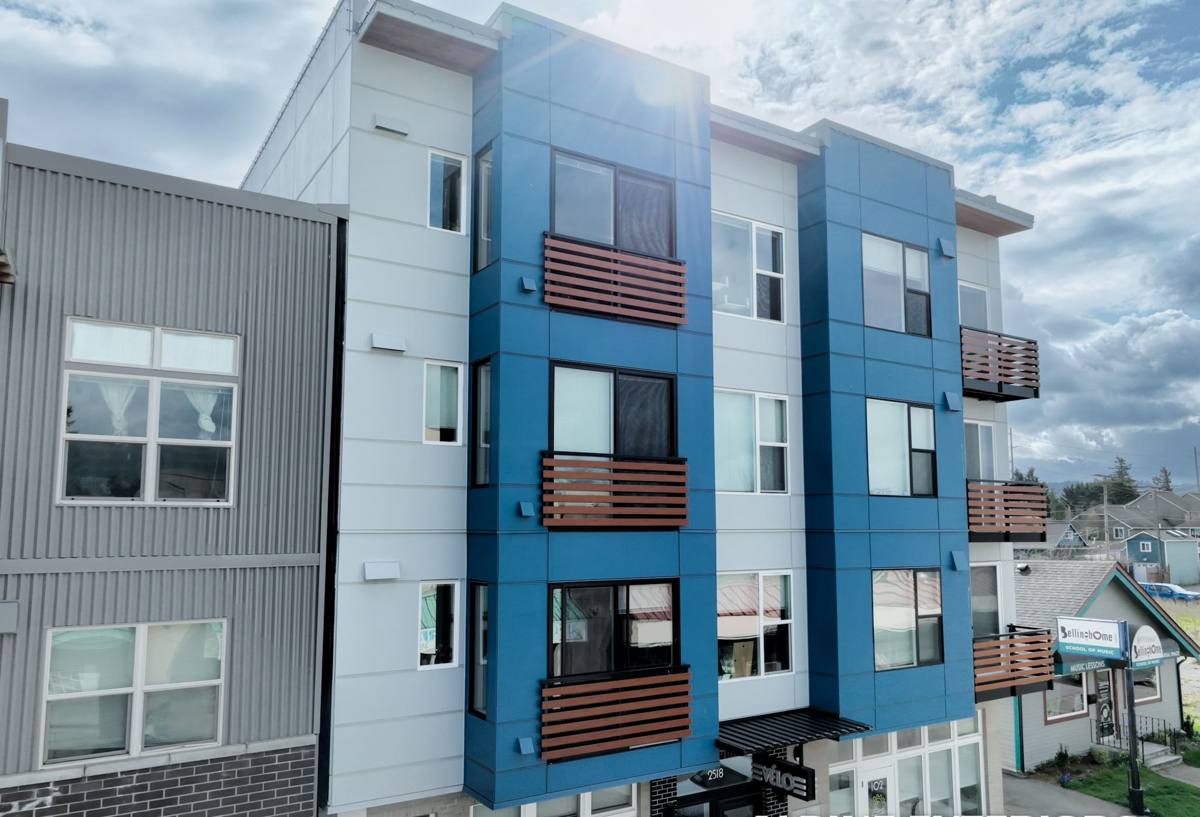
What Salt Air, Rain, and Moss Actually Do to Siding
Salt Air
Airborne salt is corrosive and hygroscopic — it draws moisture into whatever it settles on. Wood-based sidings absorb that salt-laden moisture into their fibers, which accelerates swelling and rot cycles. Metal fasteners and trim exposed to salt air corrode faster than they would further inland. Any siding product used near Semiahmoo needs to shed that moisture rather than absorb it, and it needs fastening hardware rated for coastal exposure.
Driving Rain
Whatcom County doesn't just get a lot of rain — much of it arrives sideways, driven by wind off the water. That means siding faces get soaked repeatedly, and any horizontal lap, seam, or panel edge that isn't properly lapped and sealed becomes a water entry point. Driving rain finds the weak spots in a siding job faster than a calm, straight-down rain ever would.
Moss and Algae Season
Shaded north and west-facing walls in this region can stay damp for months at a time. That's ideal growing conditions for moss, algae, and mildew. Organic-based siding materials — wood, and to a lesser extent some engineered wood products — give that growth something to root into and feed on. Fiber cement doesn't offer the same food source, which is a real advantage over a multi-decade timeline.
Why We Only Install James Hardie
We made a deliberate decision as a company to install James Hardie fiber cement siding and nothing else — not vinyl, not LP SmartSide or other engineered wood products, not Cemplank or Allura fiber cement alternatives, not primed spruce or cedar. That's not a marketing position; it's a standard we hold because of what we've seen these products do over time in exactly this kind of coastal, wet climate.
- Vinyl can warp and become brittle in temperature swings, and its seams and panels rely heavily on correct overlap to keep driving rain out — a failure point in a climate like this one.
- Wood-based engineered siding performs well in moderate climates but is more sensitive to sustained moisture exposure at cut edges and panel joints, which is a real risk given how long walls here stay wet.
- Primed spruce or cedar requires disciplined, ongoing maintenance — recoating, caulking, and moisture monitoring — to hold up against salt air and moss, maintenance that's easy to fall behind on.
- Other fiber cement brands may share the base material but don't carry the same factory-applied ColorPlus finish, engineered HZ product lines, or the same track record and warranty structure we've come to trust.
James Hardie's fiber cement is non-combustible, dimensionally stable, and engineered in region-specific HZ formulations — the HZ5 line built for exactly the wet, moderate-temperature coastal conditions found around Semiahmoo and Custer. The ColorPlus factory finish is baked on under controlled conditions, which gives it better fade and moisture resistance than field-applied paint, and it comes with a real transferable warranty. When it's installed to spec, it's the product we're comfortable putting our name behind on a Custer home.
What a Correct Hardie Installation Involves
Hardie siding is only as good as the installation behind it. In a high-moisture, salt-exposed area, the details matter more than usual.
Water Management First
Before a single piece of siding goes up, the wall needs a correctly installed weather-resistant barrier, properly integrated flashing at every window, door, and penetration, and a rainscreen or drainage gap where conditions call for it. This is the layer that actually keeps driving rain out of the wall assembly — the siding is the second line of defense, not the only one.
Fastening and Clearances
James Hardie specifies exact nailing patterns, fastener types, and minimum clearances from grade, roofing, and decks. In a salt-air environment, using corrosion-resistant fasteners isn't optional — it's the difference between trim that holds for decades and streaking, rust-stained siding within a few years.
Caulking and Joint Treatment
Butt joints, trim intersections, and panel edges need to be treated per Hardie's specifications — some joints sealed, others intentionally left to drain. Getting this wrong is one of the most common causes of moisture problems in fiber cement installs, and it's almost always an installer error, not a product failure.
Cut Edge Sealing
Every field cut exposes raw fiber cement that needs to be primed or sealed before installation. Skipping this step is a shortcut that shows up years later as localized moisture absorption at panel ends — exactly where you don't want it in a climate this wet.
Our Process for Custer Projects
| Step | What Happens |
|---|---|
| Assessment | On-site inspection of current siding, wall condition, moisture history, and exposure (sun, shade, wind direction) |
| Plan | Product line selection (typically HZ5 for this region), color, trim details, and water management plan specific to the home |
| Prep | Removal of old siding, repair of any water-damaged sheathing found underneath, installation of barrier and flashing |
| Install | Hardie panels or planks installed to manufacturer spec — fastening, clearances, joint treatment, cut-edge sealing |
| Final Walkthrough | Detail check on trim, caulking, and finish before we call the job done |
Cost Factors for a Custer Siding Job
Every home is different, but the same handful of factors tend to drive cost on siding projects in this area:
| Factor | Why It Matters |
|---|---|
| Existing wall condition | Rot or water damage found under old siding adds repair scope before new siding can go on |
| Home size and complexity | More corners, dormers, and trim detail means more labor and material |
| Siding profile | Lap, shingle-style, and panel products differ in material and labor cost |
| Access and exposure | Multi-story walls, tight lot lines, or steep grading affect scaffolding and staging |
| Trim and accessory scope | Fascia, soffit, and trim replacement alongside siding adds to the total but improves the whole envelope |
We give straightforward, itemized estimates so you can see what's driving the number — no vague lump-sum pricing.
What to Ask Any Siding Contractor Before Hiring
- Are you a certified or factory-trained James Hardie installer, and can you show it?
- What's your water management plan for this specific wall — barrier, flashing, drainage gap?
- How do you handle fastener selection given the salt air exposure this close to the water?
- What's your approach to cut-edge sealing and joint treatment on this job?
- Do you carry liability insurance and worker's comp, and can you provide proof?
- What does the manufacturer warranty cover, and what does your workmanship warranty cover separately?
Why Local Experience in Custer Matters
A crew that's worked this specific stretch of Whatcom County already knows which wall orientations hold moisture longest, how far salt air carries inland from the water, and where moss tends to establish first on a home. That knowledge shapes real decisions — where to add extra flashing attention, which side of the house needs the most careful joint sealing, what drainage details are worth the extra time. It's the difference between a generic installation and one actually built for Custer's conditions.
Maintaining Hardie Siding in This Climate
James Hardie siding is low-maintenance, not no-maintenance. A periodic rinse to knock off salt residue and organic buildup, an annual look at caulking and trim joints, and prompt attention to any physical damage will keep it performing for the long haul. Because the ColorPlus finish is factory-applied, you're not on a repainting schedule the way you would be with wood siding — but a quick seasonal check is still worth the time given how much this climate throws at exterior surfaces.
If you're weighing siding options for a home in Custer, we're happy to walk the property, look at what's there now, and give you a straightforward, no-pressure estimate on what a correctly installed James Hardie system would look like for your house. Use the form below to get started.