 Semiahmoo Exterior
 Windows Built for Cherry Point's Coastal Exposure
Cherry Point sits close enough to the water that salt air, wind-driven rain, and a long moss season are simply part of owning a home here. Whatcom County's marine climate is milder than most of the country, but "mild" doesn't mean easy on building materials. Windows in this part of Washington take on a slow, steady kind of abuse: salt-laden air corrodes hardware and finishes, wind pushes rain sideways into gaps that would stay dry inland, and months of overcast, damp weather give moss and mildew every opportunity to take hold on sills and frames. A window that's correctly specified and installed for Cherry Point looks different, in small but important ways, from one built for a dry inland town.
We install and service custom windows specifically for homes in this area, and the difference shows up in material choice, flashing detail, and hardware selection — not just in the glass.
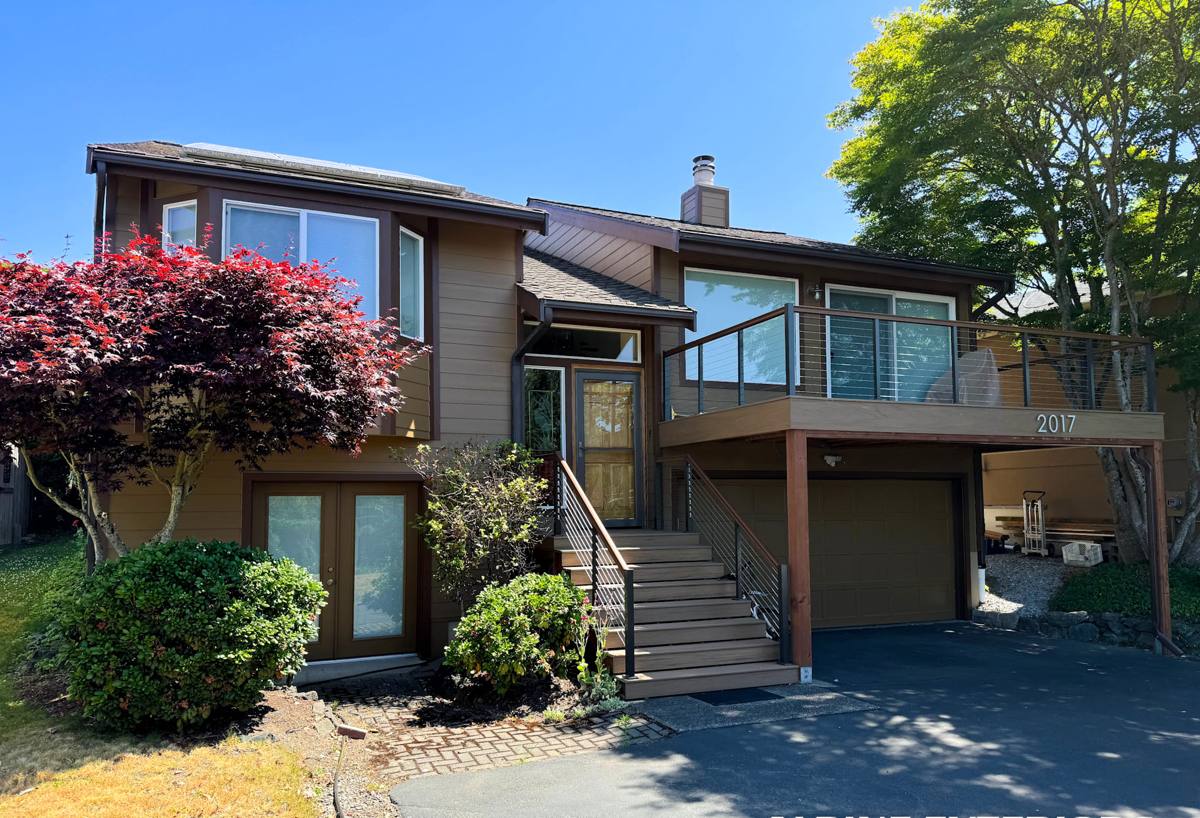
What Cherry Point Homes Actually Need From Their Windows
Salt Air and Corrosion
Proximity to Semiahmoo Bay and the Strait of Georgia means airborne salt settles on everything, including window frames, screens, and fasteners. Over years, salt exposure pits untreated aluminum, corrodes cheap steel hardware, and dulls finishes faster than it would a few miles inland. Corrosion-resistant hardware and finishes aren't an upsell here — they're a practical response to where the house sits.
Wind-Driven Rain
This stretch of coastline gets weather that comes in sideways, not just straight down. Rain forced horizontally by wind finds its way into any gap in flashing, any shortcut in sill pan installation, or any window that was caulked instead of properly flashed. Water intrusion around windows is one of the most common sources of hidden rot we find in older Whatcom County homes, and it almost always traces back to installation, not the window unit itself.
Moss, Mildew, and a Long Damp Season
Cherry Point's growing season for moss and mildew runs long — shaded, north-facing walls and window wells that don't get much sun or airflow stay damp for months at a stretch. Wood sills and frames without the right finish or drainage detailing will hold moisture against the material, which is exactly what invites rot and moss growth. Vinyl and fiberglass frames sidestep some of this, but drainage detailing at the sill still matters no matter what the frame is made of.
Choosing the Right Window Material for This Climate
There's no single "best" window material — the right choice depends on the home's exposure, budget, and how much upkeep the owner wants to take on. Here's how the common options compare for a Cherry Point setting specifically.
| Material | Salt Air Performance | Maintenance | Typical Lifespan |
|---|---|---|---|
| Vinyl | Good — won't corrode or rust | Low; occasional cleaning | 20-30 years |
| Fiberglass | Very good — dimensionally stable, resists salt and moisture | Low | 30-40 years |
| Aluminum (uncoated/older style) | Poor to fair — prone to pitting and corrosion near the coast | Moderate to high | 15-25 years, shorter near salt exposure |
| Wood (unclad) | Fair — needs diligent finish maintenance | High; repainting/sealing on a cycle | Varies widely with upkeep |
| Wood-clad (aluminum or fiberglass exterior) | Good — cladding shields the wood from weather | Low to moderate | 25-35 years |
For most Cherry Point homes, we steer customers toward vinyl or fiberglass, or clad-wood if they want a wood interior look with weather protection outside. Unclad wood and older uncoated aluminum are the two we're most cautious about recommending on directly exposed elevations — not because they're bad products in general, but because this specific climate asks more of them than they're built to give without a demanding maintenance routine.
What a Correct Installation Involves
The window unit itself is maybe half the equation. The other half is installation detail, and it's where most water problems actually originate.
Sill Pan Flashing
Every window opening should get a sloped sill pan that directs any water that gets past the window back outside, rather than letting it sit against the framing. This is non-negotiable on a wind-driven-rain coastline like this one.
Weather-Resistive Barrier Integration
The window's flashing needs to integrate properly with the house wrap or weather barrier — shingled so water sheds down and out, never trapped behind the siding. Skipping or rushing this step is invisible on install day and expensive five years later.
Sealant Selection and Placement
Caulk is not a substitute for flashing — it's a backup layer, and it needs to go in the right joints, not everywhere. Over-sealing can actually trap moisture that needs to drain out through weep holes.
Proper Shimming and Fastening
Windows that aren't shimmed level and square bind, leak, and wear out their hardware faster. Corrosion-resistant fasteners matter here more than in a dry inland install.
Our Process for Cherry Point Window Projects
- On-site assessment. We look at each window's exposure — which walls take direct wind and rain, which stay shaded and damp — before recommending materials.
- Material and glass selection. We walk through frame material, glass package (including any noise or heat-gain concerns), and hardware finish based on that exposure assessment.
- Removal and inspection. Old windows come out carefully so we can inspect the framing underneath for hidden rot or moisture damage before anything new goes in.
- Correct flashing and sill pan installation. This is the step we don't shortcut, regardless of time pressure.
- Window setting, shimming, and fastening. Level, square, and properly fastened with corrosion-resistant hardware.
- Interior and exterior finish work. Trim, sealant, and cleanup restore the look of the home inside and out.
- Final walkthrough. We check operation, seals, and finish with the homeowner before calling the job done.
Signs Cherry Point Homeowners Should Watch For
- Fogging or condensation between panes (a failed seal on double- or triple-pane glass)
- Soft or discolored wood trim or sill around the window
- Windows that stick, won't latch fully, or have gone out of square
- Visible corrosion or pitting on hardware or aluminum frames
- Moss or dark staining building up on sills or lower frame sections
- Drafts or noticeably higher heating bills in the room where the window sits
- Peeling paint or bubbling finish on wood-framed windows
Any one of these on its own might be minor. Several showing up on the same window usually means it's time for a closer look, not just a caulk touch-up.
Repair, Restoration, or Full Replacement?
Not every window problem calls for full replacement. We evaluate case by case:
- Repair makes sense when the frame and structure are sound but a seal has failed, hardware has worn out, or a pane needs replacing.
- Restoration fits older wood windows with good bones where refinishing, re-glazing, and hardware upgrades can extend their life without losing their character.
- Full replacement is the right call when framing has taken on water damage, the window is single-pane with no practical upgrade path, or the frame material itself is a poor match for its exposure — an uncoated aluminum unit on a direct-wind wall, for example.
We'd rather tell a Cherry Point homeowner their windows have a few good years left than sell a replacement job that isn't needed yet.
What Affects Cost on a Window Project
| Factor | Why It Matters Here |
|---|---|
| Frame material | Fiberglass and higher-end vinyl cost more upfront but hold up better against salt air and reduce long-term upkeep |
| Number and size of openings | Larger or custom-shaped windows require more material and labor |
| Existing damage | Rotted framing found during removal adds repair work before the new window goes in |
| Exposure and flashing complexity | Walls facing direct wind and rain need more careful, time-intensive flashing detail |
| Glass package | Upgraded glazing for noise, heat gain, or extra weather resistance adds cost but pays off on an exposed elevation |
| Access | Second-story or hard-to-reach openings take more time and equipment |
Why Local Experience with Cherry Point Homes Matters
A crew that already works this stretch of Whatcom County knows which walls on a Cherry Point home take the brunt of the weather before they ever step on site. That's not guesswork — it's the difference between a window install that's built to handle this specific coastline and one that's built to a generic standard and hopes for the best. We've made the material and flashing decisions above enough times, for homes with the same salt air, wind-driven rain, and moss exposure, that we're not learning on your project. That matters both for the quality of the install and for how the window performs five, ten, and twenty years down the road.
Get a Free, No-Pressure Estimate
If you're dealing with drafty, foggy, or hard-to-operate windows in Cherry Point, or you're planning ahead for a full replacement, we're happy to take a look and give you an honest read on repair versus replacement. Use the form below to request a free estimate — no pressure, no obligation.