 Semiahmoo Exterior
 Why California Creek Decks Wear Out Faster Than the Manufacturer's Spec Sheet Suggests
Every deck sold in the Pacific Northwest comes with a warranty number and a maintenance schedule written by someone who has never stood on a California Creek deck in February. Out here, close to the water in Semiahmoo, decks live a harder life than the paperwork assumes. Salt-laden air off the water accelerates corrosion on fasteners and hardware. Driving rain off Semiahmoo Bay drives moisture sideways under railings and ledger boards, not just straight down where it's easy to shed. And Whatcom County's long, gray moss season means organic growth gets a running start every fall and doesn't let go until late spring.
None of that means a deck can't last. It means the deck has to be built and replaced with those specific conditions in mind, not treated like a generic backyard project. That's the difference between a deck that needs real work again in eight years and one that holds up for decades.
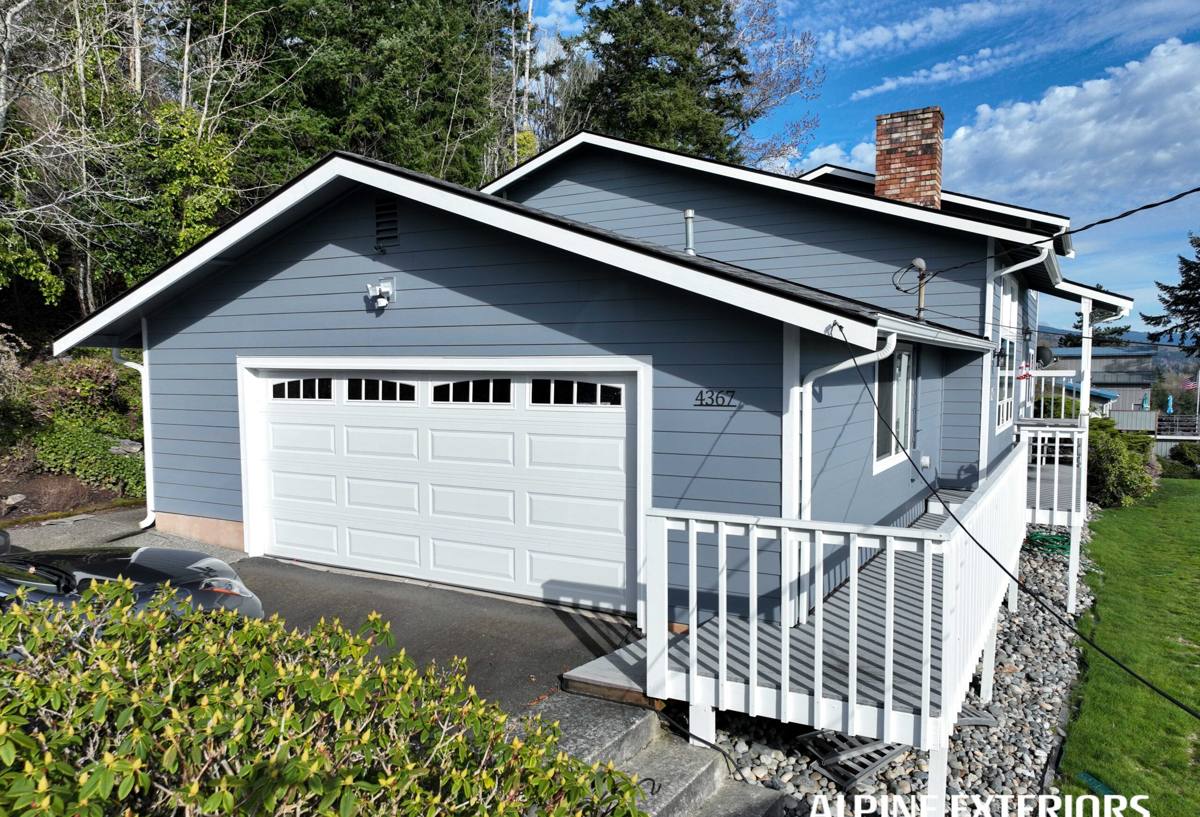
What "Replacement" Actually Means Out Here
Deck replacement isn't just tearing off old boards and screwing down new ones. On a California Creek property, a proper replacement means looking at the whole system — framing, fasteners, flashing, drainage, and the ledger connection to the house — because in this climate, the surface boards are rarely the only thing that failed.
What we check before we touch a single board
- Condition of the ledger board and its flashing where the deck meets the house — this is the single most common point of hidden rot in our climate
- Joist and beam integrity underneath, especially anywhere moss or debris has been sitting against wood
- Post bases and any ground contact points for standing water and rot
- Fastener condition — salt air corrodes standard hardware faster than most homeowners expect
- Railing post connections, which take on a lot of wind load this close to the water
- Drainage under and around the deck footprint, including how water currently sheds away from the house
If we find soft framing or a compromised ledger connection, we say so plainly and address it as part of the job. Replacing the decking over a bad substructure just means paying for the same project again in a few years.
Salt Air: The Slow Damage You Don't See Until It's a Problem
Salt air doesn't announce itself. It works quietly on metal — screw heads, joist hangers, structural bolts — long before it shows up as a visible problem on the surface. A deck built with standard interior-grade or even generic exterior fasteners can develop hardware failure well before the wood itself is due for replacement, particularly for homes with direct or near-direct exposure to the water.
On a California Creek replacement, we spec fasteners and structural hardware rated for coastal and high-corrosion environments — typically stainless steel or heavy hot-dip galvanized, depending on the application. It costs more up front than generic hardware. It also means you're not opening up a deck five years from now to find rusted-through joist hangers hiding under decking that still looks fine.
Moss Season and Moisture Retention
Whatcom County's wet season runs long, and moss doesn't need much encouragement to take hold on a north-facing or shaded deck surface. Beyond the slip hazard, moss and organic buildup hold moisture directly against the decking material, which accelerates rot in wood decking and can stain or degrade composite surfaces over time if left unaddressed season after season. Board spacing, airflow underneath the deck, and material choice all factor into how much of a moss problem a given deck will have — it's worth discussing during your estimate if moss has been a recurring issue at your home.
Material Options: Honest Trade-Offs for This Climate
There's no single "right" decking material for every California Creek home — it depends on your budget, how much maintenance you want to take on, and how exposed your specific site is to sun, wind, and moisture. Here's how the common options actually perform in our conditions.
| Material | How it handles our climate | Maintenance reality |
|---|---|---|
| Pressure-treated wood | Solid performer if fasteners and flashing are done correctly; moisture cycling is the main long-term stress | Needs periodic sealing/staining and moss removal to look and perform its best |
| Cedar | Naturally moisture-resistant and handles our climate well when detailed properly; still an organic material | Higher upfront cost, needs regular finish maintenance to hold its color and resist moss |
| Composite decking | Very consistent moisture performance; doesn't rot, but board surface still needs periodic cleaning where moss and algae can gather | Low maintenance overall — no staining or sealing, occasional washing |
| PVC/capped polymer | Strong moisture resistance and generally the most stable in wet, shaded areas | Low maintenance; higher material cost than composite |
Whatever surface material you choose, the substructure underneath — framing, fasteners, flashing — gets built to the same coastal-durability standard. That's where most of the long-term difference in deck life actually comes from.
Our Process for a California Creek Deck Replacement
1. On-site assessment
We walk the existing deck with you, check the framing and ledger connection where accessible, and talk through what we're seeing before any demo starts. If the substructure is in better shape than expected, that changes the scope and the estimate — we're not going to sell you a full rebuild you don't need.
2. Scope and material selection
We go over decking material options, hardware specs, and railing choices based on your site's exposure, budget, and how much upkeep you want long term. You get a clear, written estimate before anything is scheduled.
3. Demo and structural repair
Old decking, and any framing or ledger material that didn't pass inspection, comes out. We don't cover over hidden rot — anything compromised gets replaced as part of the job, not flagged as a future problem.
4. Flashing and waterproofing at the ledger
This connection point is where the deck meets the house, and it's the single spot most responsible for water intrusion problems down the road. We flash it correctly the first time.
5. Framing, decking, and railing installation
Corrosion-resistant fasteners and hardware throughout. Railing posts secured to actual structural framing, not just decking boards, so they hold up to wind load off the water.
6. Final walkthrough
We walk the finished deck with you, cover basic care for whatever material you chose, and answer questions before we consider the job done.
Why Local Experience on This Specific Job Matters
A deck replacement crew that mostly works inland doesn't think about salt-air hardware corrosion the same way a crew that works Semiahmoo waterfront properties does, because they don't see the failures that only show up out here. Knowing that California Creek homes need upgraded fastener specs, knowing which framing details actually shed the driving rain typical of this stretch of Whatcom County, and knowing how aggressive to be about moss-resistant board spacing — that's knowledge that comes from working this specific area, not from a general contractor's playbook.
We're not guessing at what your deck needs based on a national average climate. We're building to what actually happens to decks a few hundred yards from the water in this part of Washington.
Signs Your Deck Is Due for Replacement, Not Just Repair
- Soft or spongy spots in the decking surface, especially near the house or in shaded areas
- Visible rot or staining at the ledger board where the deck attaches to the house
- Railing posts that feel loose or wobble under moderate pressure
- Rust streaking around fastener heads or hardware
- Persistent moss or algae that returns quickly even after cleaning
- Boards that have cupped, split, or separated significantly at the joints
- A deck original to a home built more than 15-20 years ago that hasn't had structural work done
If you're only seeing one or two of these, a repair may still make sense. If you're seeing several at once, or if the framing itself is compromised, replacement is usually the more honest answer — patching a failing substructure just delays the real cost.
What This Typically Involves, Cost-Wise
Every deck replacement is priced on its own footprint, framing condition, material choice, and site access, so we won't put a number here that doesn't apply to your actual project. What we can tell you is what drives the cost up or down, so you know what you're looking at before we ever get to a number.
| Factor | Why it matters |
|---|---|
| Deck size and shape | Larger footprints and multi-level or angled designs take more material and labor |
| Framing condition | Hidden rot or an undersized structure adds scope you can't skip without risking safety |
| Material choice | Pressure-treated, cedar, composite, and PVC all sit at different price points |
| Railing style | Basic wood rail vs. cable, glass, or composite railing changes both cost and maintenance |
| Site access | Elevated decks, tight side yards, or water-facing sites can affect labor and equipment needs |
We'll walk your specific deck and give you real numbers — not a range pulled from a national average that doesn't account for what your framing or exposure actually needs.
Get a Straight Answer About Your Deck
If your California Creek deck is showing its age — soft boards, a stubborn moss problem, rust at the hardware, or a railing that doesn't feel as solid as it used to — we'll come take a look and tell you honestly whether it needs replacement, repair, or just a maintenance plan going forward. No pressure, no upsell. Fill out the form below for a free estimate.