 Semiahmoo Exterior
 Blaine's Coastal Climate Is Rough on Siding
Blaine sits right at the edge of the Salish Sea, close enough to Semiahmoo Bay that salt-laden air is simply part of daily weather here, not an occasional event. Combine that with Whatcom County's long, wet winters and the driving rain that comes off the water during fall and winter storms, and you have one of the more demanding siding environments in Washington. Add a moss season that can stretch for months in shaded, north-facing exposures, and it's easy to see why siding on Blaine homes ages differently than siding fifty miles inland.
None of this means siding is doomed to fail. It means siding needs to be matched to the exposure, installed with real attention to water management, and repaired correctly the first time. A patch job that ignores the underlying moisture path just buys a homeowner a year or two before the same spot fails again.
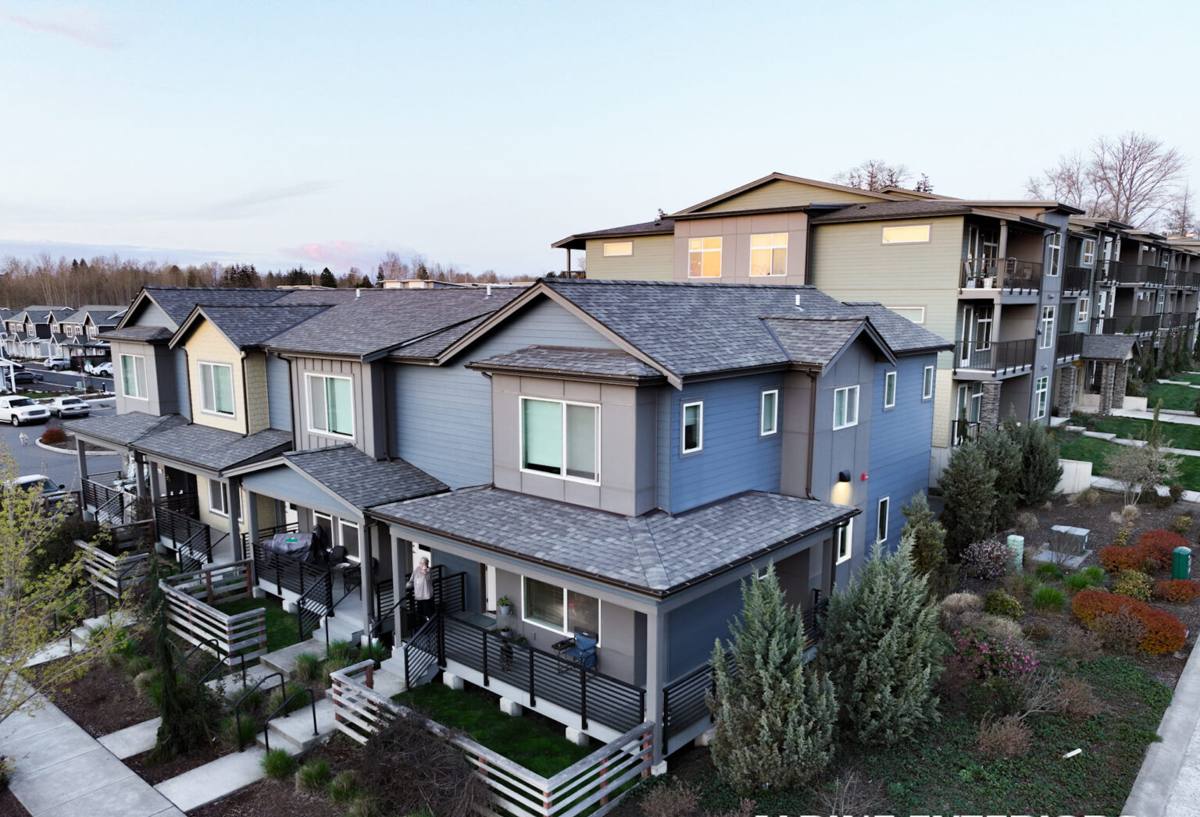
Why Repairs Fail Faster Near the Water
Salt Air and Fastener Corrosion
Airborne salt accelerates corrosion on any exposed metal fastener, flashing, or trim edge. When siding nails or staples corrode, boards loosen, gaps open, and water gets a path behind the cladding. A repair that reuses corroded fasteners or ignores compromised flashing is a short-term fix wearing the disguise of a long-term one.
Driving Rain and Wind-Driven Moisture
Blaine's storms don't just drop rain straight down — wind off the water pushes it sideways into wall assemblies, corners, and window trim. Siding systems here need proper laps, correctly sealed penetrations, and a functioning drainage plane behind the cladding. Repairs that only address the visible surface, without checking what's happening behind the board, tend to reappear.
Moss, Algae, and Trapped Moisture
Shaded siding, especially on north- and east-facing walls near mature trees, holds moisture longer and grows moss and algae readily. Moss holds water against the siding surface far longer than open air would, which is hard on any siding material but especially damaging to products that swell, delaminate, or absorb moisture at cut edges and seams.
Signs a Blaine Home Needs Siding Repair
Some damage is obvious. Some isn't visible until you know where to look. A homeowner walking their own exterior once or twice a year can catch most of it early.
- Soft or spongy spots when you press on siding, especially near the bottom courses and around windows
- Visible gaps, buckling, or boards that have pulled away from the wall
- Persistent moss or algae staining that returns quickly after cleaning
- Peeling, bubbling, or chalky paint that suggests moisture is moving through the material
- Dark staining or streaking below window sills, trim joints, or roof-to-wall intersections
- Rust streaks running down from fasteners or metal flashing
- Interior signs — musty smell, discolored drywall, or peeling interior paint on an exterior wall
- Visible rot or crumbling material at corners, butt joints, or near ground contact
Any one of these on its own may be minor. Several together, especially on the same wall, usually point to a moisture problem that's been developing for a while.
What a Correct Siding Repair Actually Involves
Diagnosing the Cause, Not Just the Symptom
The board you can see damaged is rarely the whole story. Before any repair starts, we pull back enough siding to see what's happening underneath — the condition of the water-resistive barrier, the flashing at windows and penetrations, and whether the damage is isolated or has spread along a wall. Repairing the visible board without checking behind it is how the same spot ends up damaged again within a season or two.
Matching Materials and Profiles
A repair should be invisible once it's done — same reveal, same profile, same finish. On homes with older or discontinued siding, this sometimes means a section needs to be extended further than the visibly damaged area to keep the pattern and color consistent, rather than leaving an obvious patch.
Rebuilding the Water Management, Not Just the Surface
Correct repair work restores proper flashing, correct lap sequencing, and an intact drainage plane behind the new material — the parts that actually keep water out over time. Caulk and paint over a bad water path is cosmetic, not structural.
Repair or Replace: How to Think About the Decision
Not every damaged wall needs full replacement, and not every repair is worth doing instead of replacing. The right call depends on how widespread the damage is, what's causing it, and what material is currently on the house.
| Factor | Leans Toward Repair | Leans Toward Replacement |
|---|---|---|
| Extent of damage | Isolated to one or two areas | Spread across multiple walls or elevations |
| Underlying cause | One-time event (impact, isolated flashing failure) | Systemic moisture intrusion or chronic exposure issue |
| Existing material | Still-sound James Hardie or comparable fiber cement | Vinyl, LP SmartSide, cedar, or primed wood nearing end of service life |
| Age of siding | Well within expected service life | Near or past the material's realistic lifespan |
| Homeowner goals | Address a specific problem now | Reduce long-term maintenance and upgrade performance |
Where we're honest with Blaine homeowners: if the existing siding is a material that struggles in this climate — vinyl that's warped from heat and impact, LP SmartSide with edge swelling, or cedar with ongoing moisture and maintenance demands — a repeated cycle of repairs often costs more over time than moving to a system built for this exposure.
Why We Rebuild Damaged Sections With James Hardie Fiber Cement
We install James Hardie fiber cement exclusively — not vinyl, not LP SmartSide, not Cemplank, Allura, primed spruce, or cedar. When we're repairing a wall or replacing a damaged section, that standard doesn't change. There are a few reasons this matters specifically in Blaine's environment.
Fiber cement doesn't feed mold or rot the way wood-based products can, and it holds up to sustained moisture exposure without the swelling or delamination risk that comes with wood-fiber composite products in a wet, humid coastal climate. It's non-combustible, which matters for fire-risk considerations regardless of coastal location. James Hardie's HZ5 product line is specifically engineered for climates with more moisture exposure, and the factory-applied ColorPlus finish is baked on under controlled conditions rather than field-applied, which matters a great deal in an area where paint has to fight salt air and constant damp for years between recoats.
We're not going to tell a homeowner their existing vinyl or wood siding is worthless — plenty of it performs fine for years. But when we're the ones doing the repair or replacement work, we stand behind a single material system because we know how it behaves here, we know how to install it correctly, and we're not guessing at how it will hold up through another Whatcom County winter.
Our Siding Repair Process
1. On-Site Assessment
We look at the damaged area and the surrounding wall, check for moisture behind the siding where accessible, and identify whether the cause is isolated or systemic.
2. Honest Scope and Options
We explain what we found, what it will take to fix it correctly, and give a straight answer on whether a repair makes sense or whether replacement is the more honest long-term recommendation.
3. Removal and Inspection Behind the Siding
Damaged material comes off, along with enough surrounding siding to expose the water-resistive barrier, flashing, and sheathing condition underneath.
4. Rebuilding the Water Management Layer
Any compromised barrier, flashing, or sheathing gets corrected before new siding goes back on. This step is the one that determines whether the repair actually lasts.
5. Reinstallation to Manufacturer Spec
New material is installed with correct fastening, clearances, and lap sequencing, matched to the existing profile and finish wherever possible.
6. Final Walkthrough
We walk the repair with the homeowner, explain what was found and fixed, and flag anything else on the exterior worth keeping an eye on.
Why Local Experience in Blaine and Semiahmoo Matters
A crew that mostly works drier, inland areas doesn't always think about flashing details, fastener corrosion, or moss-related moisture the way a crew that works this stretch of coastline does every week. Working regularly in Blaine and the surrounding Semiahmoo area means we're not learning the local failure patterns on your house — we've already seen how salt air, wind-driven rain, and long moss seasons affect siding on homes like yours, and we build the repair around that, not around a generic checklist.
Maintaining Repaired Siding Going Forward
Good repair work lasts longer with a little routine attention, especially in this climate:
- Rinse siding annually, and more often on shaded or moss-prone walls
- Trim back vegetation and tree limbs that keep siding shaded and damp
- Check and clear gutters before the fall rains so overflow doesn't run down the wall
- Walk the exterior once or twice a year looking for the early warning signs listed above
- Address small issues — a loose board, a cracked caulk joint — before winter storms arrive
If you're dealing with soft spots, staining, moss buildup, or siding that just doesn't look right anymore on your Blaine home, we're happy to take a look. We offer free, no-pressure estimates — walk us through what you're seeing, and we'll give you an honest assessment of what it will take to fix it right.