 Semiahmoo Exterior
 Roofing in Blaine Harbor Means Building for Salt Air, Not Against It
Blaine Harbor sits close enough to the water that salt-laden air is a daily fact of life, not an occasional storm event. Add in Whatcom County's driving winter rain and the long, damp moss season that follows, and a roof here works harder than the same roof would thirty miles inland. Asphalt shingle roofing can absolutely hold up in this environment, but only when the materials, ventilation, and flashing details are chosen with this specific coastal exposure in mind. A shingle system that's correct for a dry inland subdivision is not automatically correct for a home a short walk from the harbor.
We work on homes throughout Semiahmoo and Blaine Harbor regularly, which means we're not guessing at how this climate treats a roof over time. We see which details hold up and which ones fail early, and we build every asphalt shingle roof we install around what actually works here.
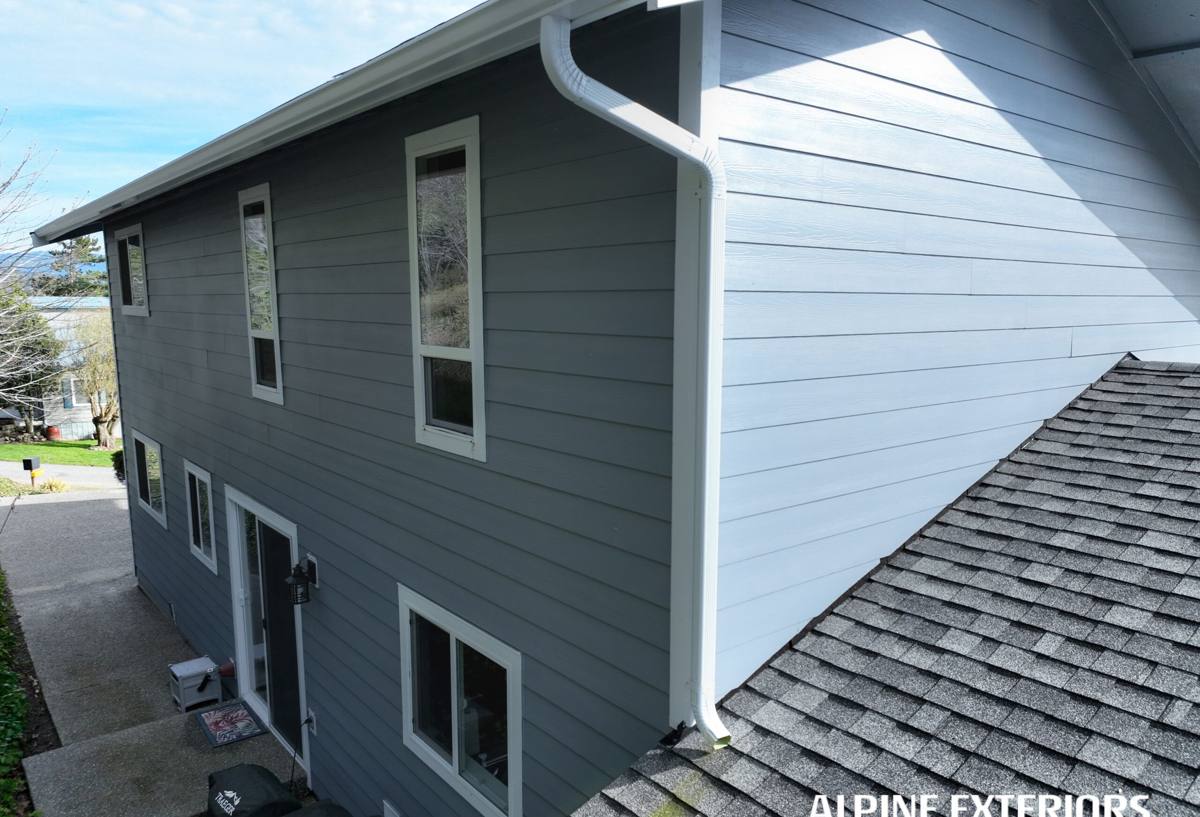
What Blaine Harbor's Climate Actually Does to a Shingle Roof
Salt Air and Corrosion
Salt in the air accelerates corrosion on any exposed metal component of a roof system — nail heads, flashing, drip edge, and vent housings included. Standard galvanized fasteners and thin flashing stock that would last decades inland can start showing rust streaks and pitting much sooner this close to the water. Over time, corroded fasteners lose their grip, and corroded flashing develops the pinholes that let water in.
Driving Rain and Wind-Driven Water
Rain in this area doesn't always fall straight down. Wind off the water pushes it sideways, which means it can work its way under shingle edges, around vent boots, and along valleys in ways that vertical-only rain wouldn't. A roof detailed for calm-weather rain will eventually leak here; a roof detailed for wind-driven rain won't.
Moss and Prolonged Moisture
Whatcom County's moss season is long because the conditions that grow moss — shade, moisture, and mild temperatures — persist for much of the year. Moss holds water against the shingle surface far longer than the shingle was designed to tolerate, and its root structure works into the granule layer and eventually the mat underneath. Left unchecked, moss doesn't just look bad; it shortens the roof's real service life.
What a Correctly Built Shingle Roof Looks Like Here
A shingle roof that's going to perform well in Blaine Harbor isn't a different product line so much as a different set of choices made at every stage of the install. That starts with material selection and carries through every flashing detail and fastener choice on the job.
Shingle Selection
We favor architectural (laminate) shingles with algae-resistant granules over basic three-tab products for this area. The algae-resistant granules — typically copper-infused — actively slow moss and algae growth rather than just resisting wear, which matters given how long this region's moss season runs. The heavier laminate construction also holds up better against wind uplift than a three-tab shingle.
Corrosion-Resistant Fasteners and Flashing
Given the salt air, we use corrosion-resistant fastener and flashing materials rather than the minimum-grade galvanized components that are fine further inland. This is a small cost difference at install time and a meaningful difference in how the roof looks and performs ten and fifteen years out.
Ventilation That Matches the Moisture Load
Coastal homes with persistently damp air need attic ventilation that's actually sized to the roof, not just code-minimum. Poor ventilation traps moisture under the deck, which shortens shingle life from underneath — a failure mode homeowners rarely see coming because it doesn't show up as an obvious leak until it's advanced.
Underlayment as the Real Backup Plan
Shingles are the visible layer, but the underlayment is what protects the deck if wind-driven rain gets past them — which, in this climate, it eventually will at some point over the roof's life. We use synthetic underlayment with self-adhered membrane at eaves, valleys, and penetrations, which is a meaningfully more waterproof approach than felt alone in a wind-driven-rain environment.
Where Roofs Actually Fail: The Details That Matter Most
Most shingle roof problems we get called out for don't start in the open field of the roof — they start at the transitions, edges, and penetrations. This is doubly true in a coastal, high-moisture area like Blaine Harbor.
- Valleys where two roof planes meet and water volume concentrates
- Flashing around chimneys, skylights, and dormers
- Vent pipe boots, where rubber gaskets degrade faster in UV and salt air
- Drip edges at eaves and rakes, where wind-driven rain gets a first foothold
- Low-slope sections or additions where standard shingle roofing is pushed past its limits
- Ridge caps and ridge vents exposed to the most direct wind
A roofer who treats these as an afterthought is building in the exact failure points this climate is best at finding.
Our Asphalt Shingle Roofing Process
1. On-Site Assessment
We start with a full roof and attic inspection — deck condition, existing ventilation, flashing condition, and any signs of past moisture intrusion. In an older Blaine Harbor home, this often turns up corrosion or moss damage that isn't visible from the ground.
2. Deck Preparation
Any soft, delaminated, or water-damaged decking gets replaced before a single shingle goes down. Installing new shingles over a compromised deck just hides a problem that will resurface.
3. Underlayment and Flashing First
Self-adhered membrane goes down at eaves, valleys, and all penetrations, followed by synthetic underlayment across the field. New flashing — corrosion-resistant, properly lapped — goes in at every wall, chimney, and vent before the shingles start.
4. Shingle Installation
Shingles are installed to the manufacturer's nailing pattern and exposure specs, with attention to proper alignment so wind and water shed the way the system was engineered to.
5. Ventilation Check and Correction
We confirm intake and exhaust ventilation are balanced for the attic volume, correcting undersized or blocked vents rather than leaving them as-is.
6. Final Walkthrough
We walk the finished roof and go over what was done, what to watch for, and simple maintenance steps — including moss management — that keep the new roof performing as designed.
Material and Approach Comparison
| Factor | Standard Approach | Coastal-Appropriate Approach (Blaine Harbor) |
|---|---|---|
| Shingle type | Basic three-tab | Algae-resistant architectural laminate |
| Fasteners/flashing | Standard galvanized | Corrosion-resistant grade |
| Underlayment | Felt only | Synthetic field + self-adhered membrane at eaves/valleys |
| Ventilation | Code minimum | Sized to moisture load, intake/exhaust balanced |
| Vent pipe boots | Standard rubber | UV- and salt-resistant gasket materials |
Cost Factors for Blaine Harbor Homeowners
Every roof is different, but the factors that move the price on an asphalt shingle roof in this area tend to be consistent. Rather than quote numbers that won't hold up house to house, it's more useful to know what actually drives cost:
- Roof size and the number of planes, valleys, and penetrations
- Pitch and accessibility, which affect labor time and safety setup
- Deck condition — how much plywood or sheathing replacement is needed
- Layers of existing roofing that need to be removed first
- Shingle grade selected and whether upgraded algae-resistant products are used
- Ventilation corrections needed beyond what's already in place
We give a firm, itemized estimate after seeing the actual roof — not a phone-quote guess — because these factors vary enough house to house that anything else would be a disservice to the homeowner.
Maintaining a Shingle Roof Through Blaine Harbor's Moss Season
Even a well-built roof benefits from routine attention in this climate. A few habits go a long way toward protecting the investment:
- Keep overhanging branches trimmed back to reduce shade and debris buildup
- Clear gutters and valleys of needles and leaf litter each fall before the rains set in
- Address moss growth early with gentle, manufacturer-appropriate treatments rather than pressure washing, which can strip granules
- Have flashing and vent boots checked periodically, since these fail before the shingle field usually does
- Schedule a professional inspection after major windstorms
Why Local Experience in Blaine Harbor Matters
A roofing crew that only occasionally works this close to the water will often default to inland-standard materials and details out of habit, not because they've evaluated whether those choices hold up here. A crew that works Blaine Harbor and the broader Semiahmoo area regularly has already seen how salt air, wind-driven rain, and long moss seasons affect roofs over years, not just at the moment of installation. That experience shows up in which fasteners get specified, how ventilation gets sized, and which flashing details get extra attention — decisions that are easy to skip and expensive to fix later.
If you're weighing a new roof, a replacement, or just want an honest read on the condition of the one you have, we're glad to take a look. Reach out for a free, no-pressure estimate using the form below.