 Semiahmoo Exterior
 Birch Bay's Siding Problem Isn't Like Everywhere Else
Birch Bay sits right on the water, and that changes what a house needs from its exterior. Homes a few miles inland in Whatcom County deal with rain and cold. Birch Bay homes deal with all of that plus a steady drift of salt air coming off the water, wind-driven rain that doesn't fall straight down, and a moss season that can run most of the year in the shaded, damp spots around a house. Siding here doesn't fail because it's old. It fails because it was never matched to this specific mix of conditions in the first place.
We work on homes throughout the Semiahmoo area, and Birch Bay comes up constantly because the exposure is more aggressive than what a lot of siding products, and a lot of installation crews, are set up to handle. This page covers what fiber cement siding needs to do in Birch Bay specifically, what a correct installation actually involves, and why we install James Hardie products exclusively rather than mixing in cheaper alternatives.
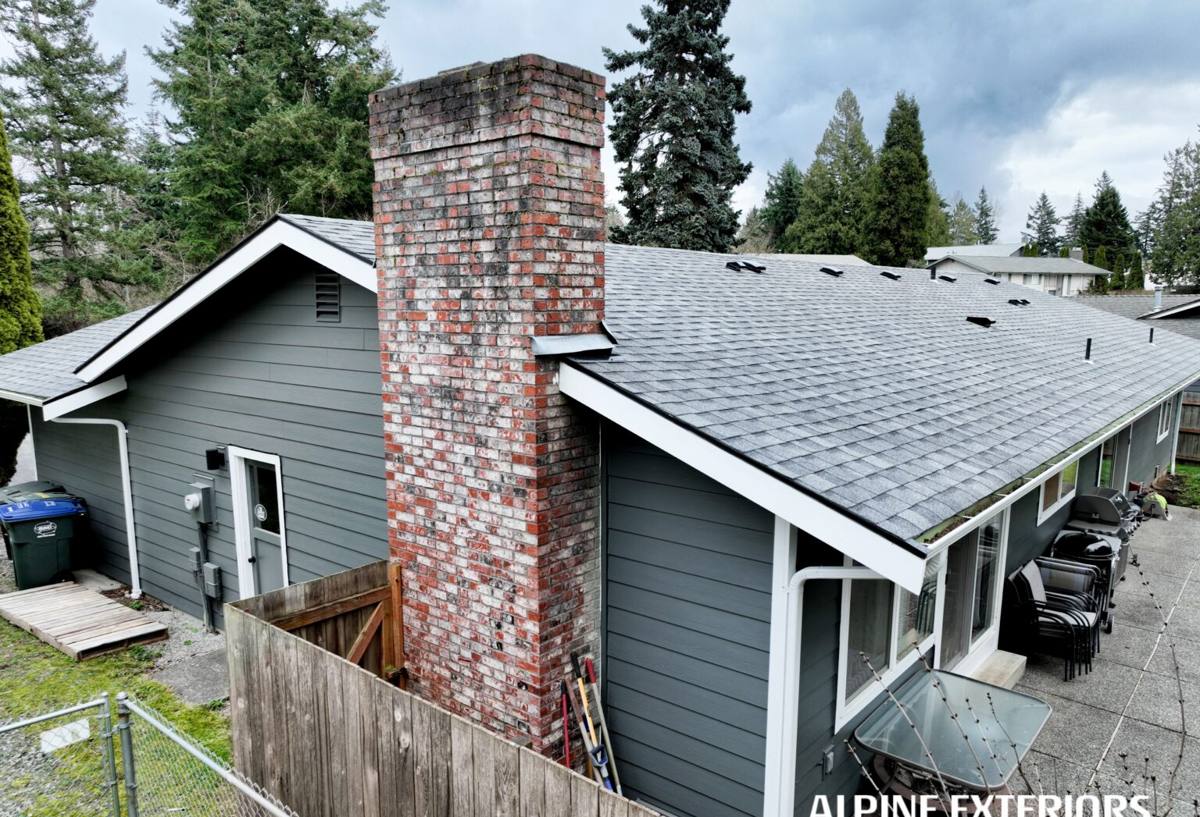
What Birch Bay's Climate Actually Does to a House
Salt Air
Airborne salt from the water settles on every exterior surface within reach of the wind, not just homes with an unobstructed water view. It accelerates corrosion on fasteners, trim, and any metal flashing that isn't rated for it, and it can degrade paint and coatings faster than the same product would wear inland. Siding material and finish both matter here — a product that isn't formulated to shrug off salt exposure will show it in the color and the surface within a few years.
Wind-Driven Rain
Storms coming off the water don't just wet a wall, they drive water sideways and upward into laps, seams, and penetrations that a straight-down rain would never reach. This is where installation detail matters as much as the material itself — the wrong flap flashing detail or a missed clearance gap becomes the entry point for moisture, regardless of how good the siding panel is.
A Long Moss Season
Shaded north walls, areas under overhangs, and anywhere air doesn't move freely stay damp for extended stretches through the fall, winter, and spring. That moisture supports moss and algae growth on siding surfaces, and it keeps wood-based products and their fasteners wet longer than a drier climate ever would. A siding system that holds moisture at the surface, in the panel itself, or behind it in the wall assembly is fighting a losing battle in a spot like this.
Why We Install James Hardie Fiber Cement — And Nothing Else
We standardized on James Hardie fiber cement siding for every home we work on, including Birch Bay, and we don't install vinyl, LP SmartSide, primed wood, cedar, or other fiber cement brands. That's not a marketing position — it's a decision based on what actually holds up under salt air, wind-driven rain, and a long wet season without turning into a maintenance project for the homeowner.
- Non-combustible core: Hardie's fiber cement composition doesn't burn, which matters given the region's wildfire seasons even though the more immediate concern here is moisture.
- Dimensionally stable: It doesn't swell, cup, or warp the way wood-based and some engineered products can when they take on repeated moisture cycles.
- ColorPlus factory finish: A baked-on finish applied under controlled conditions holds color and resists fading and chipping far better than field-applied paint, which matters in a spot where salt air is already working against any coating.
- Climate-engineered HZ product lines: Hardie makes HZ5 formulations specifically for wetter climate zones like ours, engineered for moisture and freeze-thaw performance rather than a one-size-fits-all product.
- Strong transferable warranty: A meaningful warranty backing the product matters more, not less, in a harsh coastal exposure.
We've had honest conversations with Birch Bay homeowners about LP SmartSide and vinyl over the years. Both have real strengths — LP SmartSide's engineered wood is lighter and easier to install, and vinyl is inexpensive up front. But wood-based products depend on their coating and edge-sealing staying intact to keep moisture out, and any gap in that protection in a marine climate like this shortens their life. Vinyl can warp and become brittle with temperature swings and doesn't hold up the same way to direct salt exposure over decades. We'd rather put one product on a home that we know performs here than mix options and hope.
What Correct Siding Installation Involves in a Marine Environment
The siding panel is maybe half the equation. The other half is the assembly behind it and the details around every seam, corner, and penetration — and this is where a lot of installation problems start, regardless of which siding brand is on the wall.
| Detail | Why it matters in Birch Bay |
|---|---|
| Weather-resistive barrier behind the siding | Provides a secondary moisture plane if wind-driven rain gets past the siding itself |
| Proper flashing at windows, doors, and penetrations | Redirects water that driving rain pushes into these vulnerable transition points |
| Correct clearance gaps (ground, roofline, decks) | Keeps siding from sitting in standing moisture or splashback, which accelerates moss and deterioration |
| Corrosion-resistant fasteners | Salt air attacks the wrong fastener metal faster than it attacks the siding itself |
| Correct fastener placement and spacing | Under- or over-driven fasteners create entry points and voids Hardie's installation warranty |
| Caulking and sealant at panel joints and trim | Seals the seams that wind-driven rain targets first |
| Panel overlap and butt joint treatment | Prevents water from wicking into joints during sideways rain events |
Skipping or rushing any one of these doesn't usually cause an obvious problem on day one. It shows up two, five, or ten years later as moisture damage, moss buildup, or premature finish failure — and by then it's a repair job, not a quick fix.
How Our Process Works
1. On-Site Assessment
We walk the exterior with you, looking specifically at exposure — which walls take the worst of the wind and rain, where moss is already established, where existing siding or trim shows salt or moisture wear, and whether there's evidence of moisture getting behind the current siding.
2. Tear-Off and Substrate Check
Once old siding comes off, we check the sheathing and weather-resistive barrier underneath. This is often the only point in a home's life where that layer is visible, and it's worth doing right — covering up a compromised barrier with new siding just delays the same problem.
3. Weather Barrier and Flashing Installation
We install or repair the weather-resistive barrier and get flashing details right at every window, door, and penetration before a single piece of siding goes up.
4. Hardie Panel Installation to Spec
Panels go up following James Hardie's published installation specifications — correct clearances, fastener type and placement, joint treatment, and caulking — because those specs exist specifically to hold up in climates like this one.
5. Trim, Caulk, and Final Detailing
Corner boards, trim, and every seam get sealed correctly before we call the job done, since these are the spots wind-driven rain finds first.
6. Walkthrough
We walk the finished job with you so you know what was done and why, and what (if anything) to keep an eye on going forward.
Maintenance Birch Bay Homes Actually Need
Correctly installed Hardie siding is low-maintenance, not no-maintenance. In a spot like Birch Bay, a little seasonal attention keeps it looking right and performing the way it's designed to.
- Rinse salt residue off exterior walls periodically, especially on water-facing sides, with a garden hose — no pressure washer directly against panels or joints
- Check and clear moss or algae on shaded north-facing walls before it builds up thick enough to hold moisture against the surface
- Keep gutters and downspouts clear so roof runoff isn't dumping extra water onto siding sections
- Trim back vegetation that's holding moisture or blocking airflow against any wall
- Inspect caulking at trim and joints every couple of years and re-caulk any cracked or separated sections before wet season
- Watch ground-contact clearance after landscaping changes — mulch, soil, or new plantings can creep up and close the gap siding needs
What Drives Cost on a Birch Bay Siding Job
Every home is different, so we won't put a fake number on this page, but these are the real factors that move a project's price up or down:
| Factor | Effect on cost |
|---|---|
| Amount of tear-off and disposal of old siding | More layers or harder-to-remove material adds labor |
| Condition of sheathing and weather barrier underneath | Repairs needed before new siding goes up add cost but prevent bigger problems later |
| Home size and wall complexity | More corners, dormers, and trim detail means more labor and material cuts |
| Siding profile and finish selection | Lap width, texture, and ColorPlus color options vary in material cost |
| Trim and accessory scope | Full trim replacement vs. reusing sound existing trim changes the total |
| Access and site conditions | Waterfront lots, tight setbacks, or difficult staging can affect labor time |
Why the Crew Matters as Much as the Product
James Hardie siding performs the way it's engineered to when it's installed to spec — and falls short of that when it isn't, no matter how good the panel is. A crew that regularly works Birch Bay and the broader Semiahmoo area already knows which walls on a given lot take the worst weather, where moss tends to establish first, and how to detail flashing and clearances for a marine exposure rather than a generic install. That's the difference between siding that still looks and performs well in fifteen years and siding that needs attention in five.
We're not the cheapest option if you're comparing us to vinyl installers or crews that will put up whatever product a homeowner asks for. We install one system, we install it to spec, and we stand behind the work. For a home that's going to sit through decades of Birch Bay's salt air and wet winters, that's the trade-off we think is worth making.
Get a Straight Answer for Your Home
If you're weighing a siding replacement in Birch Bay, we're happy to take a look, walk you through what your home's specific exposure needs, and give you a straightforward, no-pressure estimate. Fill out the form below to get started.