 Semiahmoo Exterior
 Deck Repair Built for Bellingham's Climate
A deck in Bellingham works harder than a deck almost anywhere else in the country. Between the marine air rolling in off the water, long stretches of driving rain from fall through spring, and a moss season that can stretch six months or more, the wood, fasteners, and structural framing underneath your deck boards are under constant pressure. Add in the freeze-thaw cycles Whatcom County gets most winters, and you have a recipe for slow, often hidden deterioration that homeowners don't notice until a board flexes underfoot or a railing feels loose.
Deck repair here isn't just about swapping out a cracked board. It's about understanding how salt-laden air corrodes hardware, how trapped moisture rots framing from the inside out, and how moss holds water against wood far longer than most homeowners realize. This page covers what Bellingham decks actually need, what a correct repair looks like, and how our process works.
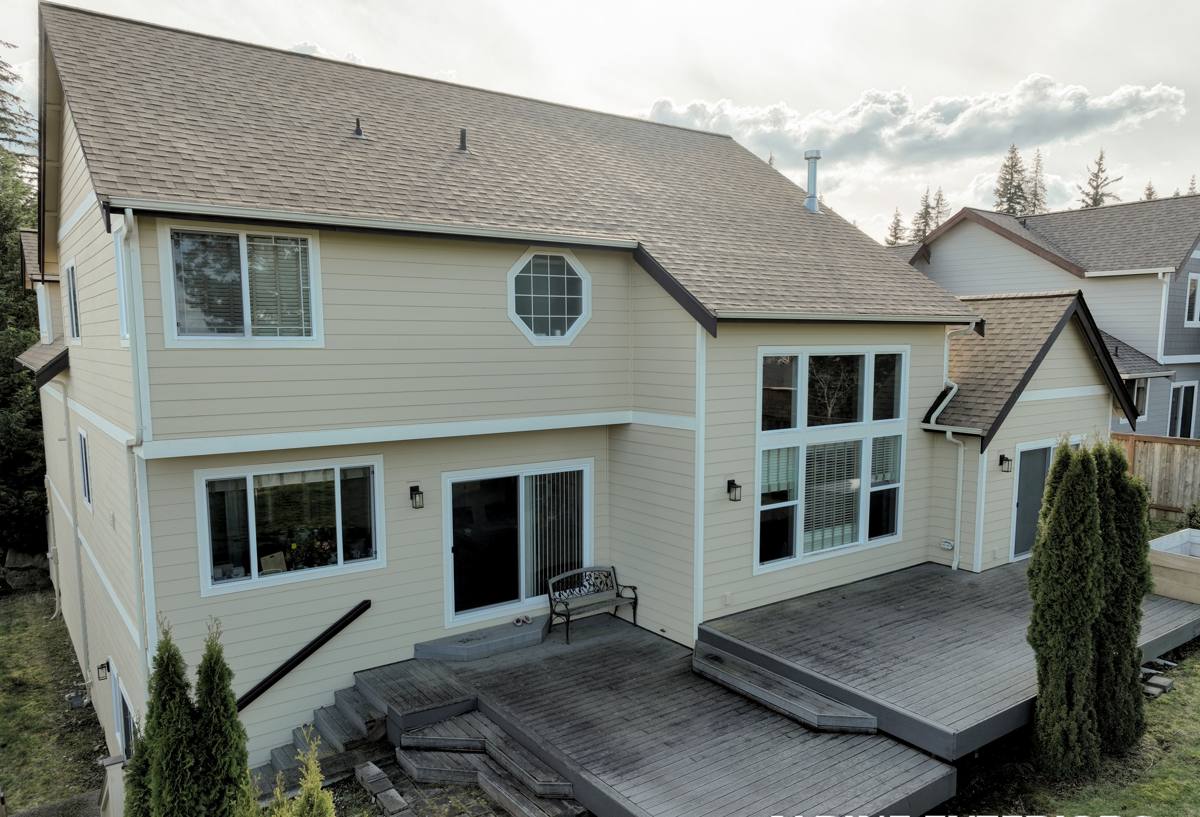
Why Local Decks Deteriorate Faster Than the Manuals Suggest
Salt Air and Corrosion
Properties closer to the water pick up airborne salt that accelerates corrosion on nails, screws, joist hangers, and structural connectors. Once a fastener starts to rust, it loses holding strength long before the rust is visible from the top of the deck. This is one of the most common hidden problems we find during repair calls — boards that look fine but are only being held by a handful of compromised fasteners.
Driving Rain and Water Intrusion
Wind-driven rain doesn't just fall straight down — it gets pushed sideways into gaps, under flashing, and into any joint that isn't properly sealed. Ledger boards (where the deck attaches to the house), stair stringers, and post bases are the areas most exposed to this kind of intrusion, and they're also the areas where a failure has the most serious consequences.
Moss, Algae, and Trapped Moisture
Moss doesn't just look bad — it holds moisture against the wood surface for weeks at a time, well past the point where the wood would otherwise dry out between rain events. Over a few seasons, that constant dampness breaks down wood fibers, degrades finishes, and creates a slick, slippery walking surface. Shaded decks and north-facing decks tend to see this the worst.
Signs Your Deck Needs Repair, Not Just Cleaning
Some deck problems are cosmetic and some are structural. Knowing the difference matters, because pressure washing and re-staining a deck with a structural problem underneath just hides the issue for another season.
- Boards that feel spongy, springy, or soft when you walk on them
- Visible gaps or separation where the deck ledger meets the house
- Railings or posts that wiggle or shift when pushed
- Rust streaks running down from fasteners or metal connectors
- Stair stringers that flex or feel uneven underfoot
- Persistent dark staining, moss growth, or a musty smell near ground-level framing
- Fasteners that have backed out or popped above the board surface
- Visible daylight or gaps between joists and beams where there shouldn't be any
If any of these sound familiar, it's worth having someone look underneath the deck, not just at the surface.
What a Correct Deck Repair Actually Involves
Structural Assessment First
Before we touch a single board, we check the framing that's holding it all up — ledger board attachment, joist condition, beam and post support, and footing stability. A deck can have brand-new decking on top of framing that's failing underneath, and that's a safety issue we won't paper over.
Fixing the Cause, Not Just the Symptom
A rotted board is often a symptom of a water management problem, not the problem itself. If flashing is missing or failed at the ledger, if there's no gap for drainage between boards, or if a post base is sitting in standing water, replacing the board without addressing the cause just means you'll be back here again in a year or two.
Hardware and Fastener Standards
Given the salt air and moisture exposure in this area, we don't cut corners on hardware. That means corrosion-resistant, code-rated fasteners and connectors rated for exterior and ground-contact use where applicable — not standard interior-grade hardware that will rust out again in a few seasons.
Common Deck Materials in This Area and How They Age
What your deck is built from changes what "repair" looks like, how long it lasts, and what to watch for. Here's how the most common materials in Whatcom County hold up:
| Material | Typical Local Lifespan | What Fails First | Repair Considerations |
|---|---|---|---|
| Pressure-treated fir/pine | 15-25 years with maintenance | Fastener corrosion, checking, ground-contact rot | Very repairable board-by-board; framing usually outlasts decking |
| Cedar | 15-20 years | UV graying, surface softening, moss retention in shade | Individual board replacement blends well; needs periodic sealing |
| Composite decking | 20-30+ years | Fastener/clip failure, moisture at cut ends, fading | Boards can't be sanded or refinished; damaged sections must be replaced |
| Older/unknown wood decks | Varies widely | Hidden framing rot, outdated fastener patterns | Often needs a fuller structural inspection before targeted repair |
Composite decking is often marketed as maintenance-free, and the surface holds up well, but the structural framing underneath is almost always still wood — which means it still needs the same moisture management and periodic inspection as any other deck.
Repair vs. Replacement: An Honest Look
When Repair Makes Sense
If the framing is sound and the damage is isolated — a few soft boards, a section of railing, a stair stringer, corroded fasteners in an otherwise solid structure — targeted repair is the more cost-effective and less disruptive route. Most of the deck calls we get in this area fall into this category.
When Replacement Is the Better Investment
When rot has spread through multiple framing members, when the ledger connection has failed, or when the deck was undersized or under-fastened for current code from the start, patching individual boards just delays a bigger project and risks safety. We'll tell you plainly which category your deck falls into and why, rather than upselling a repair job into a full rebuild or vice versa.
Our Repair Process
1. Inspection
We look at decking, framing, ledger attachment, posts, footings, and hardware condition — not just the surface. We'll point out what's cosmetic, what's a maintenance issue, and what's structural.
2. A Clear Scope
Before any work starts, you'll know what's being repaired, why, and what materials and hardware we're using and why they're appropriate for this climate.
3. The Repair Itself
We address the root cause — flashing, drainage, framing connections — alongside the visible damage, using corrosion-resistant fasteners and connectors suited to coastal Whatcom County conditions.
4. Protecting the Work
Where wood is exposed, we make sure it's properly sealed or finished before we consider the job done, so the repair isn't immediately exposed to the same conditions that caused the original damage.
Living With a Bellingham Deck After Repair
A repair holds up longer when a few basic habits become routine. Regular removal of moss and debris from between boards keeps moisture from sitting against the wood. Keeping gutters and downspouts clear prevents extra water from draining directly onto or under the deck. And a periodic look underneath — even just once a year before the wet season sets in — catches small problems while they're still small.
None of this requires a major time investment, but it's the difference between a repair that lasts a decade and one that needs revisiting in two or three years because moisture was allowed to keep doing what it does in this climate.
Why Local Experience Matters for This Kind of Work
Deck repair looks straightforward from the outside, but doing it right in a marine climate means knowing which failure patterns show up here specifically — which is different from what a general contracting guide written for a dry inland climate will tell you. A crew that regularly works on decks around Semiahmoo and the greater Bellingham area already knows where moisture tends to collect, which fastener choices actually hold up against salt air, and how to spot framing rot before it becomes a safety issue rather than after. That local pattern recognition is what separates a repair that solves the problem from one that just resets the clock on it.
If you're noticing soft spots, loose railings, or a deck that just doesn't feel as solid as it used to, we're happy to take a look and give you a straightforward, no-pressure assessment of what it actually needs. Use the form below to request a free estimate.